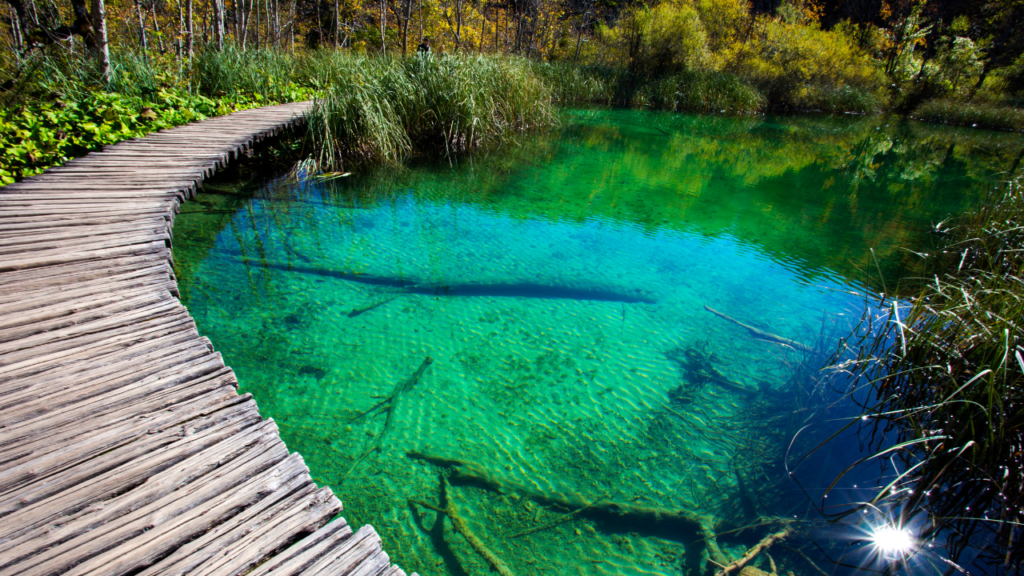
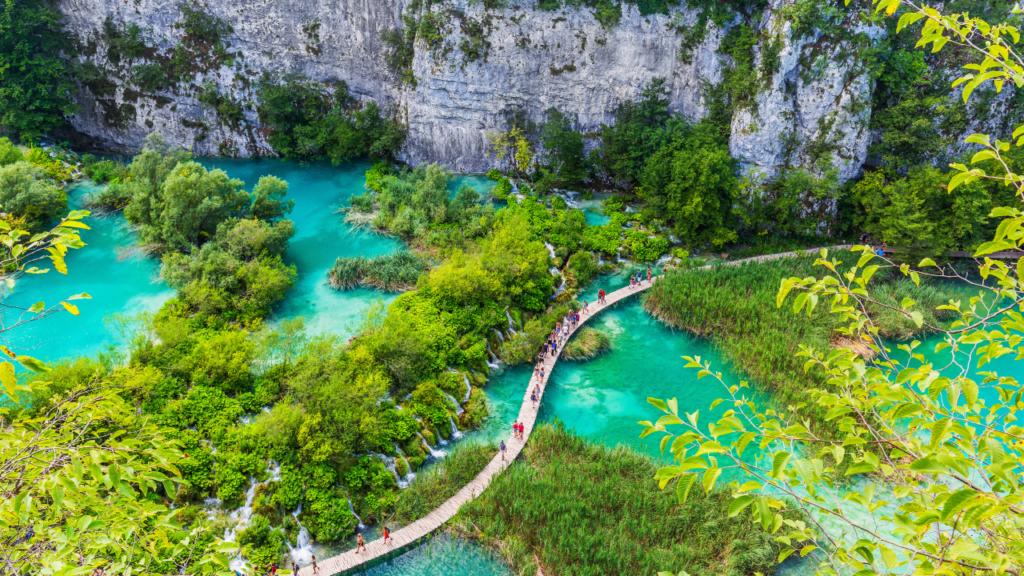
Imagine walking along a narrow, rustic wooden boardwalk that hovers just inches above water so incredibly clear it looks like liquid glass. A school of silver fish swims lazily right beneath your boots, undisturbed by your presence. All around you, the air is thick with the scent of pine and the cool, undeniable mist of rushing water. Then, you turn a corner, and there it is: a sheer limestone cliff bursting with a dozen different waterfalls, all cascading into a brilliant, emerald-green plunge pool below.
It feels like you’ve accidentally stumbled onto the set of a fantasy movie, but no CGI is involved here. Welcome to Plitvice Lakes National Park in Croatia.
If you are planning a trip to the Balkans, you already know that this UNESCO World Heritage site is an absolute non-negotiable must-do. But here is the reality check: because it is so spectacular, it is also incredibly popular. Navigating this massive, 300-square-kilometer natural wonderland without a plan is a recipe for standing in long lines, battling selfie sticks, and missing out on the quiet magic that makes this place so special.
I’ve been there, I’ve made the rookie mistakes, and I’ve learned exactly how to experience this park the right way. So, grab your virtual backpack. Here are the 7 insider secrets you need to make your visit to Plitvice Lakes completely unforgettable.
Why is Plitvice Lakes So Famous?
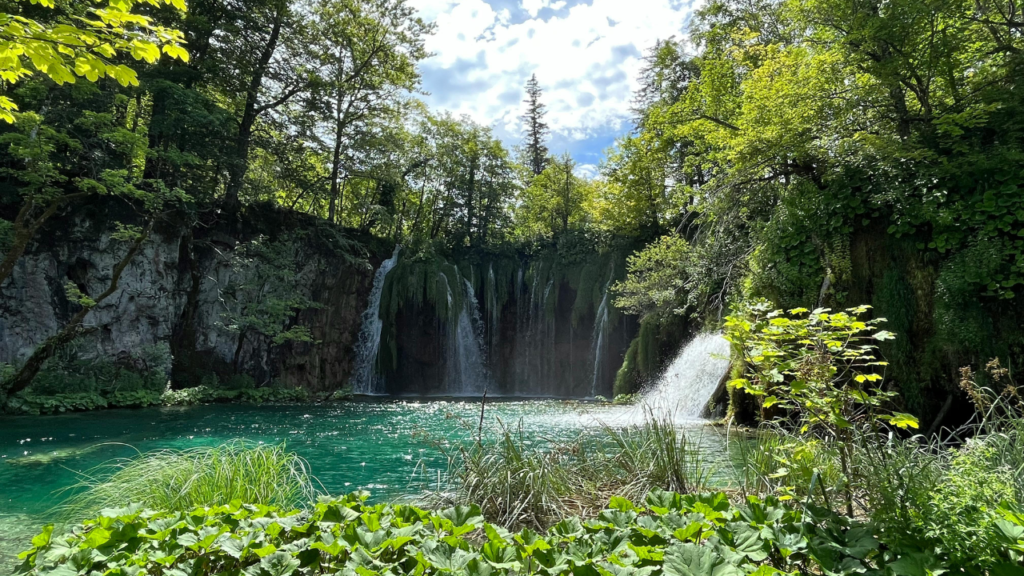
Before we dive into the hacks, let’s talk about why over a million people flock here every single year. Plitvice (pronounced pleet-veet-seh) isn’t just a lake; it’s a dynamic, ever-changing network of 16 terraced lakes connected by a staggering number of waterfalls.
The magic lies in a natural process involving travertine—a type of limestone deposited by mineral springs. Over thousands of years, water flowing over the limestone rock has left behind calcium deposits, building up natural dams that create these tiered lakes. The result is a landscape that is constantly shifting. A waterfall you see today might look completely different a decade from now.
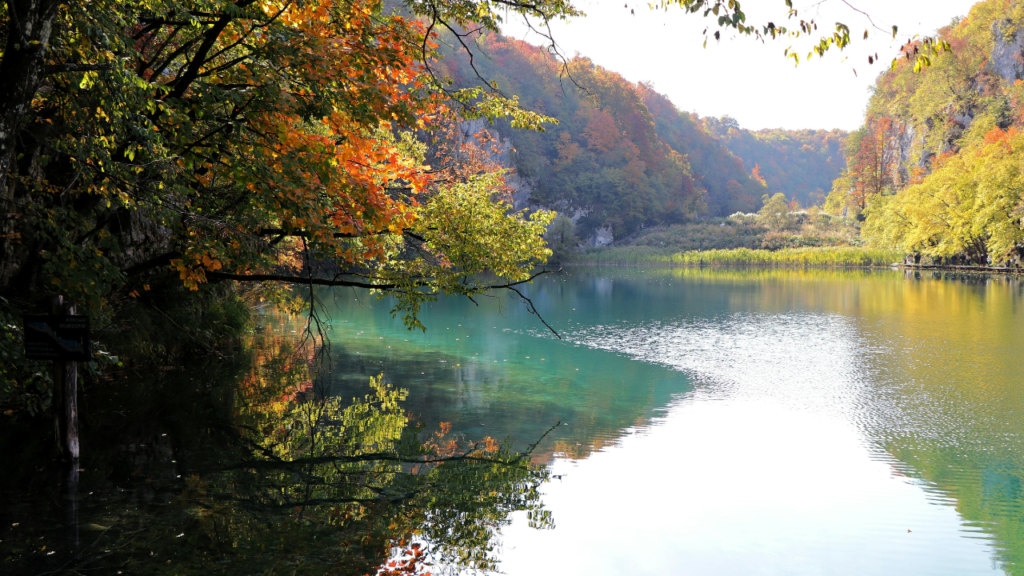
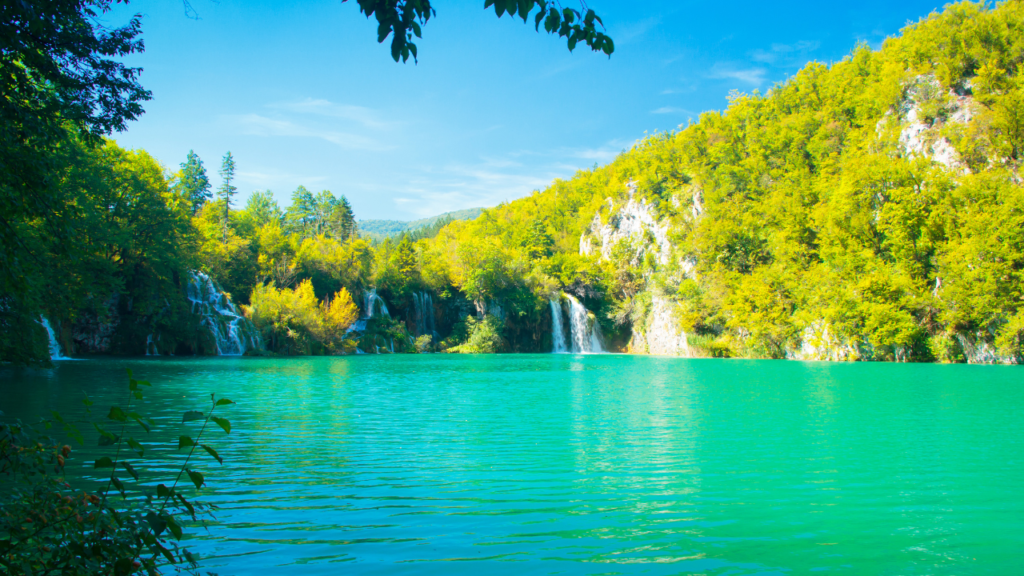
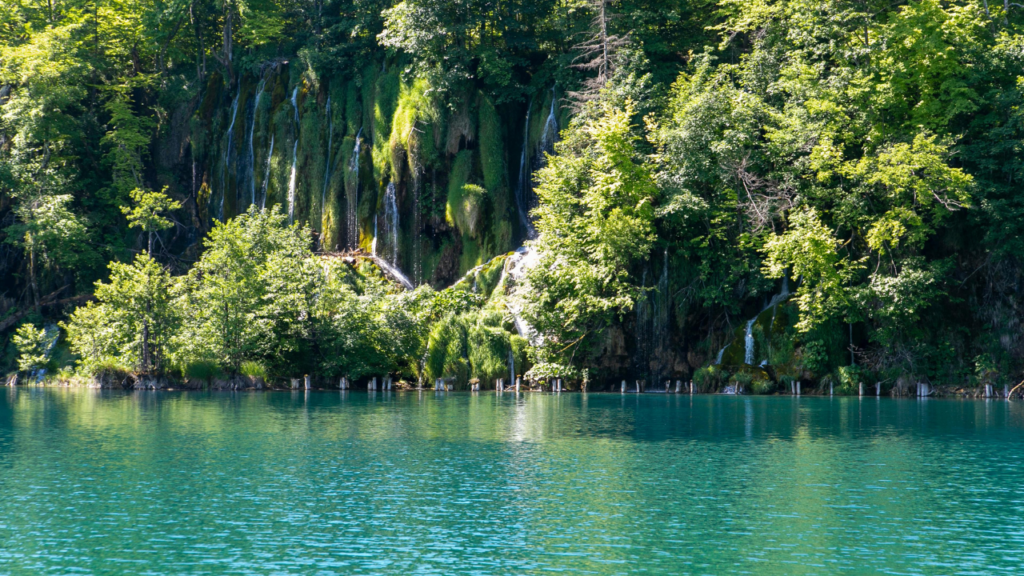
And then there are the colors. Depending on the angle of the sun, the minerals in the water, and the time of year, the lakes shift between vivid turquoise, deep sapphire, and striking emerald green. It is a photographer’s absolute dream.
Upper Lakes vs. Lower Lakes: The Geography
To conquer the park, you need to understand how it’s laid out. The park is broadly divided into two main sections:
- The Upper Lakes (Gornja Jezera): Consisting of 12 lakes, this area is vast, heavily forested, and wild. The waterfalls here are wider, the trails weave in and out of the trees, and the atmosphere feels deeply secluded.
- The Lower Lakes (Donja Jezera): This section contains 4 lakes situated in a dramatic, deep limestone canyon. The trails here are mostly the famous wooden boardwalks suspended over the water, and it’s where you’ll find the park’s biggest showstopper, the Veliki Slap (Great Waterfall).
Most visitors try to cram both into one day. It is entirely possible, but you have to be strategic. Here’s how you do it.
Secret #1: The 7 AM Advantage
I cannot stress this enough: Plitvice Lakes is not the place to sleep in. If you arrive at 10:30 AM in the middle of July, you will find yourself in a slow-moving, single-file traffic jam of tourists shuffling along narrow boardwalks without handrails. It takes the romance right out of the experience.
The secret? Be at the gate the moment it opens at 7:00 AM.
When you enter the park at sunrise, the mist is still rising off the water. The lakes are completely still, acting as perfect mirrors for the surrounding trees. You can hear the roar of the waterfalls clearly, unbothered by the chatter of tour groups. Those first two hours of the morning are pure, unfiltered magic. By the time the massive tour buses roll in around 10:00 AM, you’ll already be deep into the park, far away from the bottlenecks.
The Seasons Matter
| Season | Vibe | Pros & Cons |
| Spring (May) | Rushing water | High water levels mean spectacular waterfalls, but some trails might flood. |
| Summer (Jul/Aug) | Vibrant & busy | Perfect weather, maximum sunlight for water colors. Very crowded and hot. |
| Autumn (Oct) | Moody & colorful | Stunning fall foliage framing the turquoise lakes. Cooler, less crowded. |
| Winter (Jan) | Frozen wonderland | Frozen waterfalls and snow. Quiet, but many upper trails are closed. |
If you have the flexibility, visit in late September or early October. The crowds thin out, the heat breaks, and the changing leaves provide a stunning contrast to the blue water.
Secret #2: The Ticket Trap
Gone are the days when you could just roll up to the entrance booth and buy a ticket. To control the massive influx of visitors and protect the fragile ecosystem, the park management introduced a strict capacity limit and timed entry system.
You must buy your Plitvice Lakes tickets online, in advance.
During the peak summer months, tickets regularly sell out days ahead of time. When you book on the official national park website, you have to select a specific date, entrance gate (Gate 1 or Gate 2), and a designated entry hour.
- Pricing Reality Check: Plitvice utilizes dynamic pricing. In the dead of winter, a ticket might cost you around €10. If you visit in July or August, that same ticket jumps to nearly €40 per person.
- The Hack: If you are visiting in the summer and want to save some cash, the park offers discounted afternoon tickets (usually entry after 3:00 PM or 4:00 PM). The crowds start leaving, the golden hour lighting kicks in, and you save money.
Secret #3: Route “C” is the Ultimate Sweet Spot
When you look at the park map, you’ll see trails labeled with letters: A, B, C, K, E, F, etc. It looks like an eye exam, and it can be incredibly overwhelming trying to figure out which path to take.
If you have one full day and want to see the absolute best of both the Upper and Lower lakes without feeling like you are running a marathon, choose Route C.
Route C starts at Entrance 1 (the Lower Lakes). Here is how the magic unfolds:
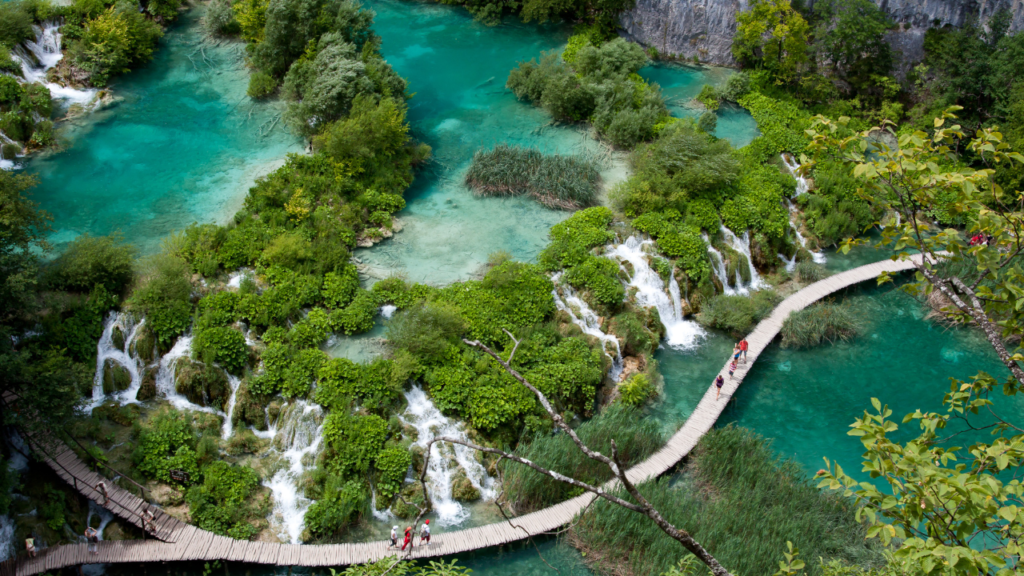
- You start with a breathtaking aerial view of the Lower Lakes canyon.
- You descend into the canyon, walking the most famous boardwalks right toward the massive Veliki Slap waterfall.
- You gradually hike up through the Lower Lakes until you reach Kozjak, the largest lake in the park.
- Here, your ticket includes a free electric boat ride across Lake Kozjak, giving your feet a rest and offering gorgeous panoramic views.
- You dock at the Upper Lakes and spend the next couple of hours winding through the lush, waterfall-heavy upper trails.
- Finally, at the top, a panoramic shuttle bus (also included in your ticket) drives you all the way back down to Entrance 1.
It takes about 4 to 6 hours depending on your pace and how many photos you stop to take. It hits every major highlight while utilizing the park’s transport to save your energy.
Secret #4: The Veliki Slap Reality Check
The Veliki Slap, translating simply to “Great Waterfall,” is the tallest waterfall in Croatia, plunging 78 meters (256 feet) down a sheer cliff face. It is breathtaking, but it comes with a catch.
Because it is located right near Entrance 1, it is usually the very first thing everyone rushes to see. The viewing platform at the base of the falls is a dead-end, meaning everyone who goes in has to turn around and come out the exact same way. By midday, this spot is a claustrophobic nightmare of flying elbows and photobombing strangers.
The Pro-Move: Visit the Veliki Slap immediately upon entering at 7:00 AM. You will have it entirely to yourself. Stand close enough to feel the cold spray on your face, take your uncrowded photos, and get out before the masses descend.
Bonus Tip: There is a somewhat hidden set of steep stone stairs carved into the cliffside near the waterfall. If they are open (they are sometimes closed for safety), climb them. They lead to an incredible, secret viewpoint looking down over the falls and the boardwalks below.
Secret #5: Dress for a Mildly Wet Hike, Not a Fashion Show
I get it. The lakes are gorgeous, and you want that perfect Instagram shot in a flowing summer dress. But let’s be practical: you are going to be walking anywhere from 8 to 15 kilometers on uneven terrain.
The famous boardwalks are made of rough-hewn logs. They are beautiful, but they are also uneven, lack handrails, and get incredibly slippery when wet from waterfall mist or morning dew.
- Footwear: Leave the heels, wedges, and slick-soled sandals at the hotel. You need sneakers with good grip or light hiking boots. Trust me, I saw a tourist lose a flip-flop into the rapids below, and she had to hobble barefoot for three miles. Don’t be her.
- Layers: Even in the dead of summer, the mornings in the canyon are surprisingly chilly. Bring a light jacket or fleece that you can stuff into a backpack once the sun burns off the mist.
- The Mist Factor: You will get lightly sprayed by waterfalls. If you are bringing an expensive camera, make sure you have a lens hood and a microfiber cloth to wipe off the moisture.
Secret #6: Survival Rations (Bring Your Own Food)
Let’s be brutally honest: the food situation inside Plitvice Lakes National Park is not great. There are a few designated rest areas (mostly near the boat docks) that sell basic concessions. Think overpriced, mediocre hot dogs, dry sandwiches, and long lines just to buy a bottle of water.
You are in one of the most beautiful places on Earth; don’t ruin it by getting “hangry” in a 30-minute line for a soggy burger.
Pack a picnic. Stop at a bakery (pekara) in a nearby town before you arrive. Load up on fresh Croatian bread, local cheese, cured meats, and fresh fruit. There are plenty of scenic wooden benches tucked away on the trails where you can sit down, listen to the water, and eat a fantastic meal with a million-dollar view. Just remember to pack out all your trash—protecting this environment is everyone’s responsibility.
Secret #7: The Overnight Advantage
Most people visit Plitvice as a grueling day trip from coastal cities like Split or Zadar, which requires sitting on a bus for 3 to 4 hours each way. By the time they arrive, they are exhausted, and they hit the park exactly at peak crowded hours.
If you want the ultimate Plitvice experience, book at least one night of accommodation near the park.
There are three official hotels located directly inside the park boundaries near Entrance 2 (Hotel Jezero, Hotel Plitvice, and Hotel Bellevue). They boast a slightly retro, mid-century vibe, but they offer one massive perk: If you stay at a park hotel and buy a one-day park ticket, the hotel reception will stamp it, turning it into a two-day pass for free.
If you prefer something cozier, the nearby villages of Rakovica and Korenica are packed with charming, family-run guesthouses (sobes). Waking up just 10 minutes from the gates ensures you easily hit that 7:00 AM golden hour without having to wake up at 3:00 AM on the coast.
Final Thoughts: Respect the Water
It is incredibly tempting, especially on a sweltering July afternoon, to want to dive into those cool, clear blue waters. But here is the golden rule of Plitvice: Swimming is strictly forbidden.
The lakes are so pristine precisely because human oils, sunscreens, and agitation are kept out of the water. The fragile travertine barriers that create the waterfalls can be easily destroyed by swimmers. By staying on the boardwalks and keeping out of the water, you are actively helping to ensure that Plitvice Lakes remains just as breathtaking for the next generation.
Visiting Plitvice Lakes National Park is an emotional, awe-inspiring experience. It is a stark reminder of the raw, artistic power of nature. Yes, you have to plan ahead. Yes, you have to wake up early. But the moment you hear the thunder of the falls and see that impossible emerald water, you’ll realize every single ounce of effort was completely worth it.