The transition from the Croatian mainland to the island of Korčula begins not with a passport stamp, but with the scent of wild Aleppo pine and cypress that has defined this sanctuary for millennia. As 2026 unfolds, international travelers find themselves increasingly weary of the biometric Entry/Exit System (EES) kiosks and the mandatory facial scans that have turned European borders into a technical slog [Previous Conversation, 37]. In this high-tech environment, the search for true “Time-Wealth”—the luxury of unhurried discovery—leads directly to the stone-walled streets and sapphire bays of what the ancient Greeks called Melaina Korkyra, or “Black Corfu”.
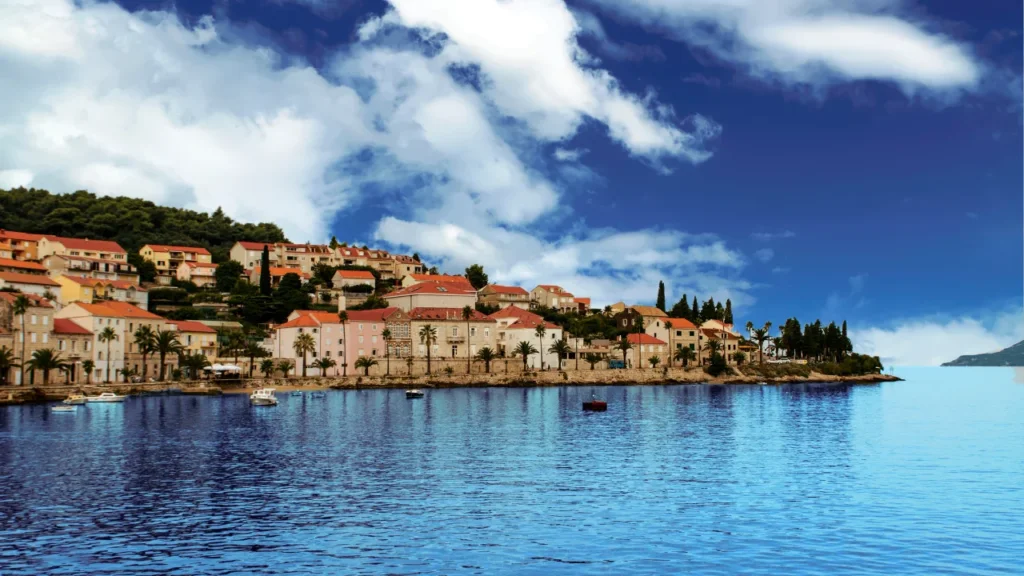
Korčula is an island that refuses to be “undumbed” for mass-market consumption. It is a place of Technical Depth, where every cobblestone in the Old Town was laid according to a 13th-century statute and where the wine you sip is made from grapes that grow nowhere else on Earth. Stretching 46.8 kilometers along the South Dalmatian coast, Korčula is the sixth largest Adriatic island and arguably the most stubbornly authentic.
1. The Mythology of the First Power Traveler: Marco Polo
Long before the modern “Power Traveler” utilized digital tools to navigate the globe, the legendary explorer Marco Polo was allegedly beginning his own journey from these very shores. While Venice claims him, local tradition—and the common surname “Depolo”—points to Korčula Town as his 1254 birthplace.
Visiting the birth house of Marco Polo is a mandatory display of respect for the history of exploration. The house is located near the Cathedral of St. Mark, and plans are underway to transform it into a full-scale museum. For the modern traveler, standing on the tower of this historic home offers a panoramic view of the Pelješac Channel—the same waters where Polo was eventually captured by the Genoese in a naval battle that changed the course of his life. It is this level of historical grit that provides the “profound reward” sought by those willing to move beyond the resort gates.
2. Korčula Town: The “Mini Dubrovnik” and Its Stone AC
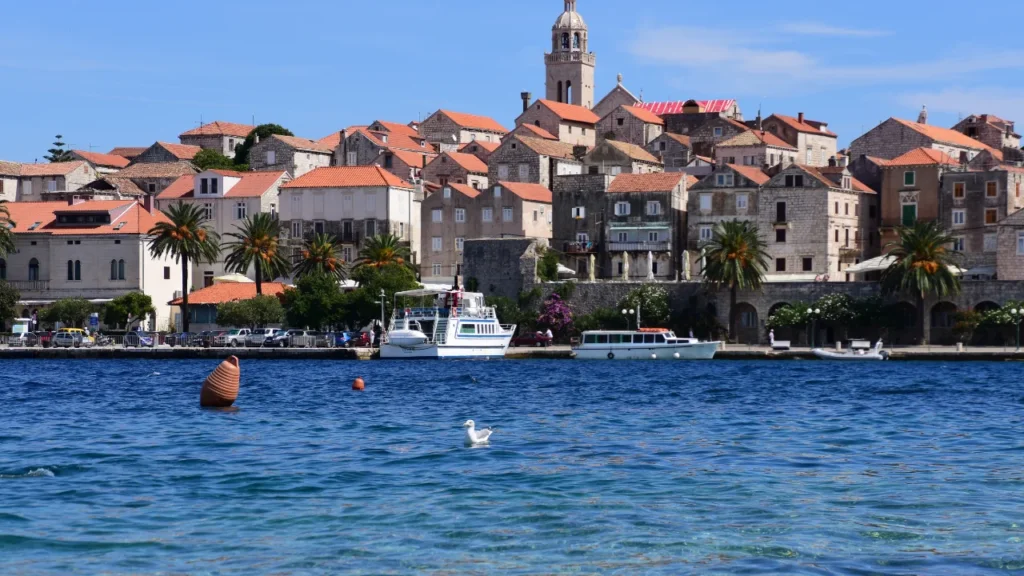
The capital of the island, Korčula Town, is one of the best-preserved medieval settlements in the Mediterranean. Perched on a tiny peninsula, its cluster of terracotta-roofed houses is protected by round defensive walls and towers.
The town’s architecture is a masterclass in functional design. The streets were built in a “fishbone” pattern: the western streets are straight to allow the cool summer maestral wind to circulate like a natural air conditioner, while the eastern streets are curved to minimize the impact of the cold winter bura. Walking through these labyrinthine lanes is a tactile connection to a time before mass-market sanitization.
Inside the walls, travelers should seek out the Bishop’s Treasury and the Icon Museum, which house religious artifacts and Greek marble tombstones that date back to the island’s earliest civilizations. This isn’t a “fly and flop” experience; it is an earned memory that requires walking the ramparts and engaging with the island’s 7,000-year history.
3. Lumbarda: Rare Grapes and the Only Sand in the Sea
Just 6 kilometers from the bustling hub of Korčula Town lies Lumbarda, a picturesque village surrounded by vineyards that grow the rare Grk wine. Grk is a white wine variety that is uniquely Thassian—wait, unique to this specific region of Korčula—and is not exported due to its extremely limited production.
The “Lumbarda Psephisma,” a stone inscription found here, is the oldest written monument in Croatia and proves that Greek settlers from Issa (Vis) were cultivating these fields in the 3rd century BC. Today, taking a wine-tasting tour through these ancient vineyards is an essential terroir-driven journey.
Lumbarda also offers a rarity in the Dalmatian archipelago: sandy beaches. Vela Pržina and Bilin Žal provide soft shorelines and shallow, turquoise waters that are perfect for families or those seeking a “Schengen Reprieve” from the rugged, rocky coastlines of the north.
4. Vela Luka: Prehistoric Secrets and Sunsets
On the westernmost tip of the island lies Vela Luka, a quieter town known for its thriving local arts scene and prehistoric discoveries. Above the town sits the Vela Spila cave, one of the most significant archaeological sites in the Mediterranean. Excavations have unearthed traces of human life dating back twenty millennia, proving that humans have sought refuge in these limestone hills long before the first biometric scan was ever conceived.
The findings from the cave are displayed at the Cultural Center Museum in the town center, alongside a collection of traditional wooden model ships and dry-stone wall architecture. For those seeking “to-the-core” relaxation, the nearby island of Proizd is an oasis of pristine nature. Daily boats from Vela Luka take visitors to Proizd’s white pebble beaches and turquoise coves, where the water clarity is among the highest in the Adriatic.
5. The Clanging of Swords: Moreška and Kumpanija
The cultural heartbeat of Korčula is found in its traditional sword dances. The Moreška, performed exclusively in Korčula Town, is a romantic folk drama where two kings battle for the heart of a maiden. Performed regularly during the summer months with vibrant costumes and live music, it is a spectacle that has been maintained for over four centuries.
In the island’s interior villages like Blato, Smokvica, and Pupnat, the Kumpanija (a chain sword dance) is performed. These dances are more than just tourist attractions; they are a form of “community fussiness”—a deep commitment to preserving traditions that haven’t been “undumbed” for mass consumption.
6. Technical Depth: Biking, Hiking, and the Skoji Archipelago
To truly find your flow on the island, you must leave the main roads. Korčula is one of the greenest Adriatic islands, blanketed in holm oak and pine forests that provide shade for its extensive network of trails.
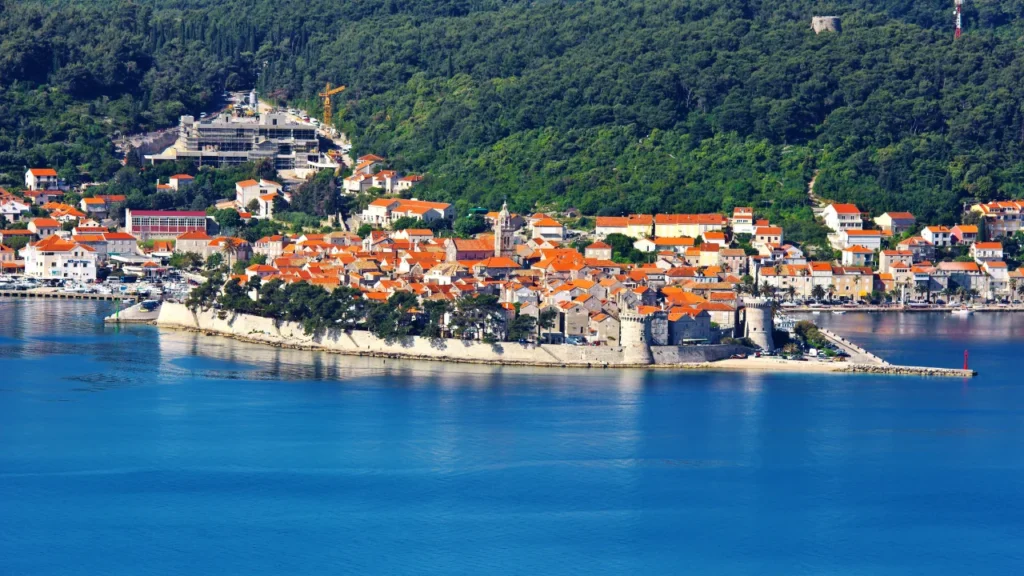
- Cycling: Numerous quiet country lanes and off-road paths make Korčula an ideal destination for a cycling holiday. We recommend the coastal route to the village of Račišće or a ride through the vineyards of Smokvica and Čara, the homeland of the famous Pošip wine.
- Hiking: For a challenging trek, head to Kom, one of the island’s highest peaks at 510 meters. Alternatively, explore the Kocje Nature Park near Žrnovo, where rock formations and ancient vegetation create a fairytale landscape where locals used to search for fairies.
- The Skoji Archipelago: A cluster of sixteen uninhabited islets sits just off the coast of Korčula Town. You can reach gems like Badija Island—home to a 14th-century Franciscan monastery and a population of friendly deer—via water taxi or kayak.
7. The Culinary Standard: Handmade Pasta and Liquid Gold
Korčula’s food scene is a terroir-driven journey that will make your brain feel like it’s “sweating lipids” in the best way possible
- Zrnovski Makaruni: This handmade pasta, typically served with a rich meat sauce, is the island’s signature dish.
- Peka: A slow-cooked meal of meat or seafood prepared under a bell-like metal dome covered in embers.
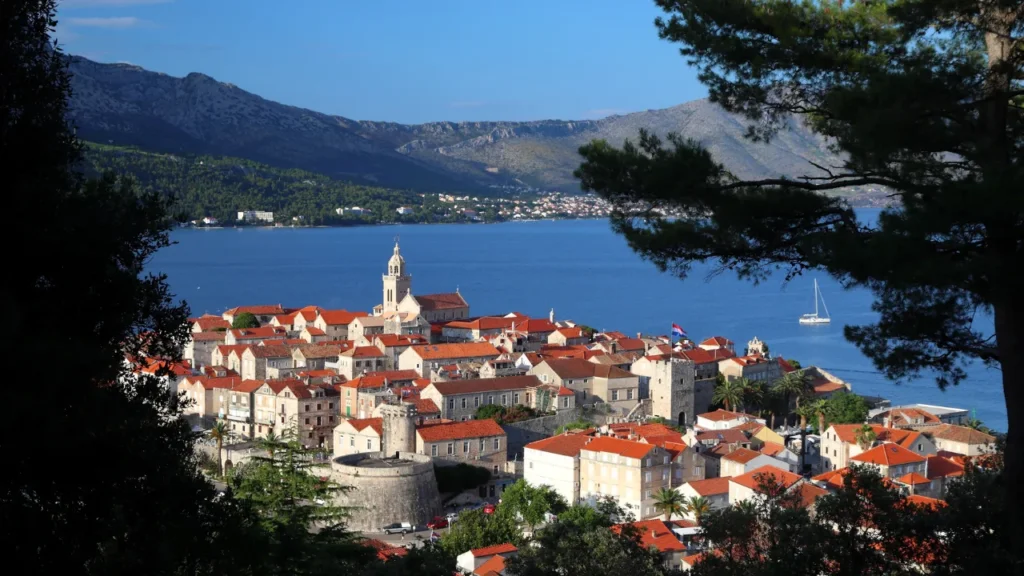
- Olive Oil: The island has a centuries-old tradition of olive farming. Tasting rooms in Vela Luka and the Barilo ethnographic collection in Blato offer an intimate look into the production of this “liquid gold”.
8. 2026 Power Traveler Intelligence: Essential Hacks
Navigating the Croatian islands in 2026 requires more than a map; it requires travel intelligence to bypass the technical slog of the road.
- The Ferry Strategy: There is no airport on Korčula. Most visitors fly into Dubrovnik (DBV) or Split (SPU) and take a catamaran. The catamaran from Dubrovnik takes about 2 hours, while the Split-to-Vela Luka ferry takes about 3 hours.
- The Pelješac Bridge: For those driving, the Pelješac Bridge allows you to bypass the Bosnian border crossing at Neum, avoiding potential EES digital friction. From the bridge, it is a short drive to Orebić, where a 15-minute car ferry connects you to the island at Dominče.
- The Cash Paradox: While the Euro is now the official currency and cards are increasingly accepted, the “heart” of the island remains cash-dependent for smaller guesthouses, village markets, and local tavernas (konobas). Always use bank-affiliated ATMs to avoid high fees.
- Senior Coverage: For travelers over 70 exploring the uneven, cobbled streets of the Old Town or the rugged hiking trails of Mount Ipsarion—wait, Mount Ipsarion is Thassos—the rugged trails of Klupca (568m), standard insurance often has gaps. Specialized plans like INF Elite are the gold standard for this unpolished terrain.
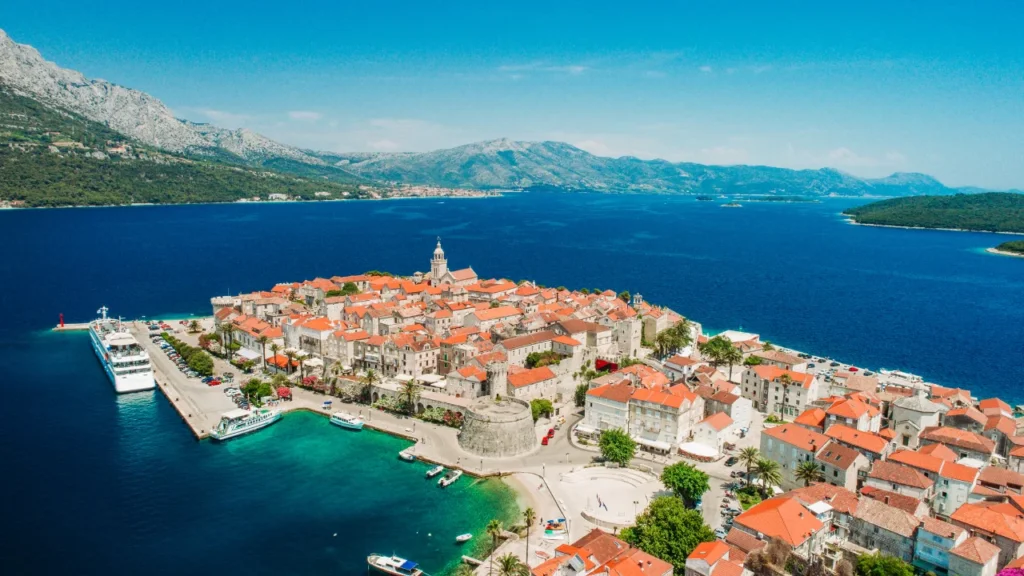
Reclaiming Your Time-Wealth
Korčula, Croatia, isn’t for the traveler who needs every second of their journey curated by an algorithm. It is for the curious, the gritty, and those who value the freedom to find their own path in a world that is still beautifully, stubbornly real [Previous Conversation].
In a year defined by EES digital friction and biometric kiosks, finding a place that still values human ease over digital efficiency is the real luxury. Whether you are scaling the medieval towers of the Old Town, diving into the prehistoric silence of Vela Spila, or sharing a glass of Grk wine with a local stranger, Korčula will surprise you in the best way possible. It is the ultimate expression of Time-Wealth in 2026.
——————————————————————————–
💬 WE WANT TO HEAR FROM YOU! Are you ready to trade the biometric queues of the West for the ancient cobblestones of Korčula? Have you ever had a “technical slog” saved by the Radical Hospitality of a local? Let us know in the comments below! 👇