The transition from the mainland to Thassos Island, Greece begins not at the ferry port of Keramoti, but in the quiet realization that the modern world’s “digital friction” has no authority over the turquoise waters of the North Aegean. As 2026 unfolds, international travelers are finding themselves increasingly weary of the biometric Entry/Exit System (EES) kiosks and the mandatory facial scans that have turned European borders into a technical slog. In this high-tech environment, the search for true “Time-Wealth”—the luxury of unhurried discovery—leads directly to the emerald slopes and ancient marble of Thassos.
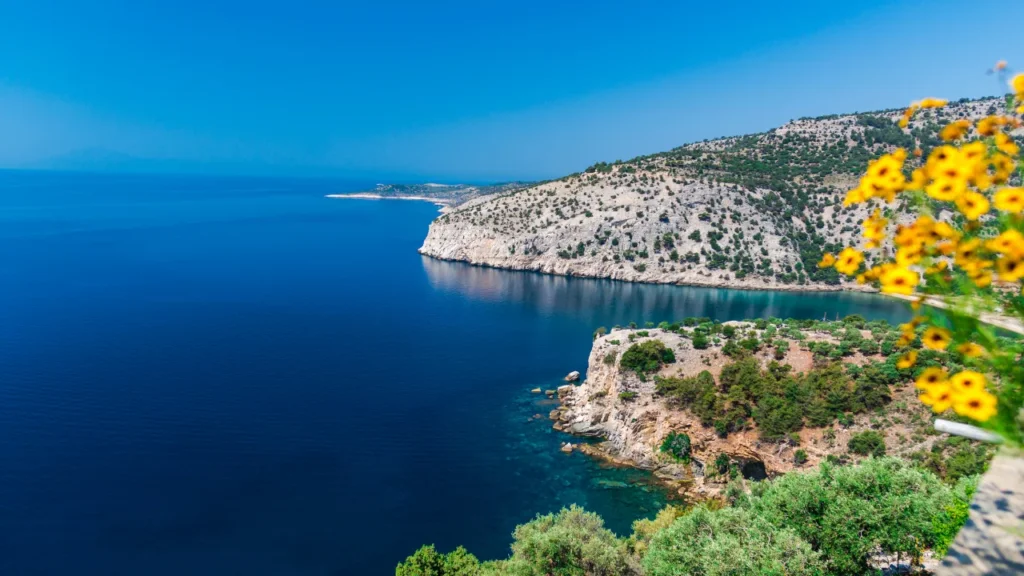
Thassos is an island that refuses to be “undumbed” for mass-market consumption. It is a volcanic, mountainous sanctuary that has perfected the art of the unpolished experience over seven millennia. Known as the “Emerald Island” because its pine forests and olive groves tumble directly into the sapphire sea, Thassos offers a level of Technical Depth that rewards those willing to look beyond the resort gates.
1. The Mythology of the First Power Traveler
Long before the first ferry glided across the eight miles of water from the mainland, Thassos was already a destination for the persistent. Mythology tells us that the island earned its name from Thasus, the son of King Agenor. Tasked with finding his sister Europa after she was spirited away by Zeus, Thasus reached this verdant coastline and was so captivated by its fertility and “golden” potential that he abandoned the search.
The legacy of this discovery remains visible today. Ancient writers once referred to it as the “Golden Island“ due to the literal gold mines that powered its economy. Walking the island today, one feels that same magnetic pull. It is a place where history isn’t just displayed in a museum; it is the ground beneath the traveler’s feet.
2. Limenas: The Jumble of Seven Millennia
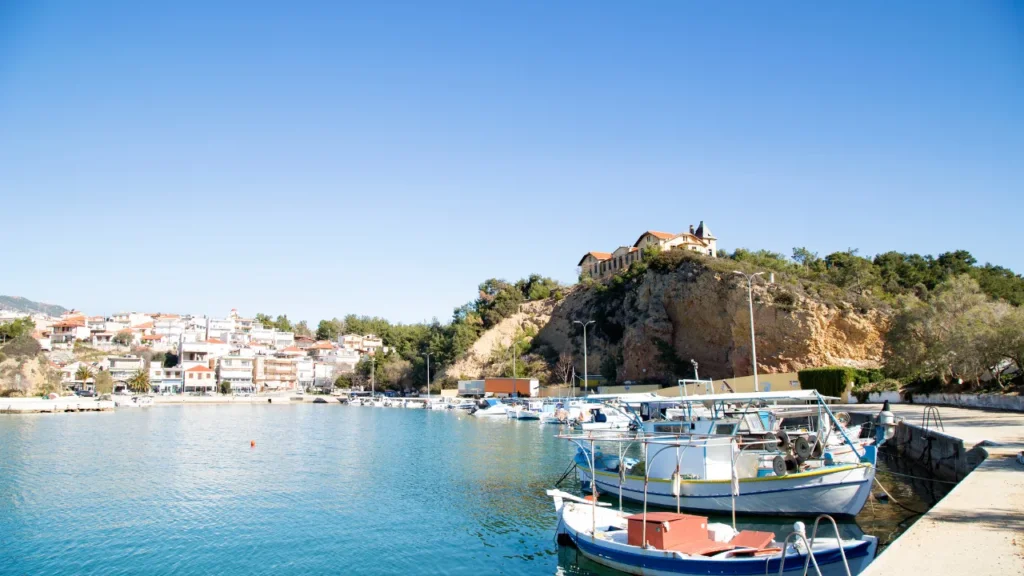
The capital, Limenas, is a curious architectural dialogue between the prehistoric and the contemporary. It is a port town where 4th-century BC temples co-exist with traditional tavernas and modern villas. To truly appreciate the town, the strategic move is a tour of the ancient ramparts.
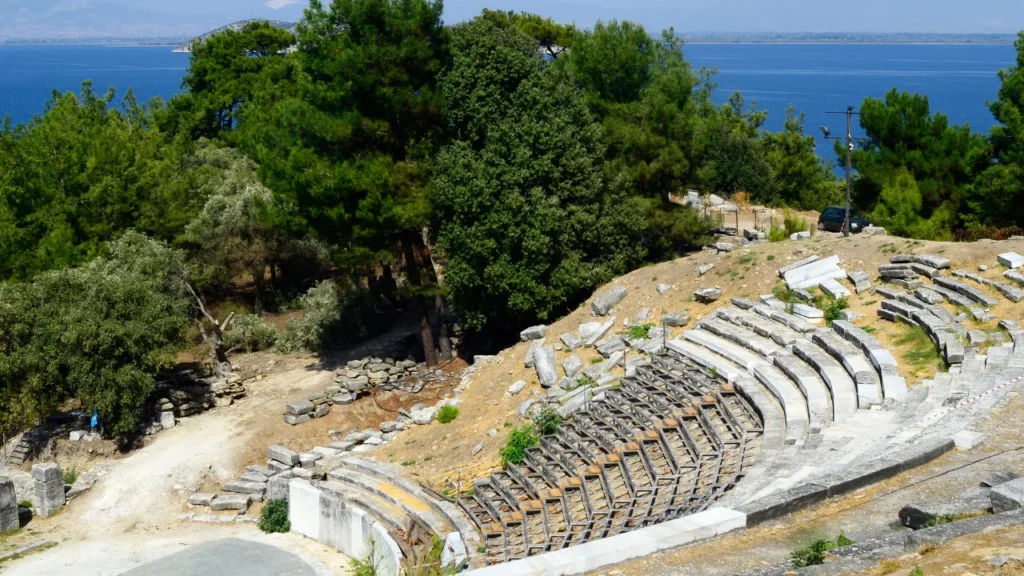
This isn’t a sanitized, velvet-rope experience. Reaching the acropolis requires a steep climb—a physical “entry fee” that grants a panoramic view of the Aegean that hasn’t changed since the Phoenicians first opened the mines. The ruins of the ancient theater, which still hosts performances during the summer festival, stand as a reminder that human culture in this region has always valued the aesthetic over the efficient.
3. The “Skala” Survival Strategy
A map of Thassos reveals a fascinating linguistic pattern: many coastal settlements are prefixed with the word “Skala,” such as Skala Potamia or Skala Prinos. This isn’t just a naming convention; it is a historical survival strategy. For centuries, the island’s population gravitated toward the inland mountain villages to protect themselves from pirate raids. The skala (meaning ladder or landing place) was merely the dock used for fishing and goods.
It wasn’t until the 20th century that the threat faded and people moved back to the shore. This history has created “paired villages.” To experience the soul of the island, one must visit both halves of the pair—spending a morning in the crystal waters of Skala Maries before driving into the interior to find the gritty, stone-roofed authenticity of original Maries in the afternoon.
4. Theologos: The Ancient Mountain Capital
Deep in the island’s interior lies Theologos, the old capital. Perched in a valley, it is a village of narrow alleys and deep traditions. Here, the hospitality is a cultural standard, a form of Radical Hospitality that provides a safety net for the curious.
In Theologos, the Folklore Museum housed in a restored stone mansion offers a window into Thassian life before the age of digital borders. Visitors should seek out the church of Agia Paraskevi to see a truly unexpected treasure: an icon of the Virgin Mary crafted entirely from wax and mastic. It is these specific, un-curated details that define the island’s character.
5. Mount Ipsarion: Paying the High Entry Fee
For the traveler seeking a “Schengen Reprieve” for the spirit, the climb to Mount Ipsarion is mandatory. Standing at 1,203 meters, it is the island’s highest peak. The journey upward through forests of plane trees, firs, and chestnuts is a study in natural grit.
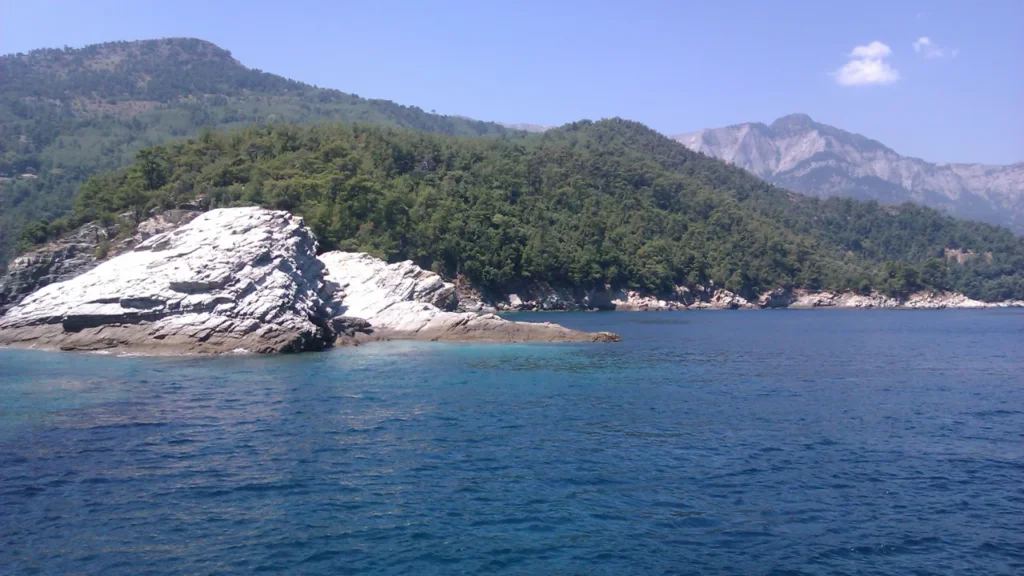
The reward at the summit is absolute silence and a “no-filter” view of the entire circular island ringed by the sea. Reaching this height requires physical exertion—a rejection of the “fly and flop” vacation in favor of an earned memory. It is the ultimate expression of Technical Depth in the North Aegean.
6. Archangel Michael’s Monastery: Living on the Edge
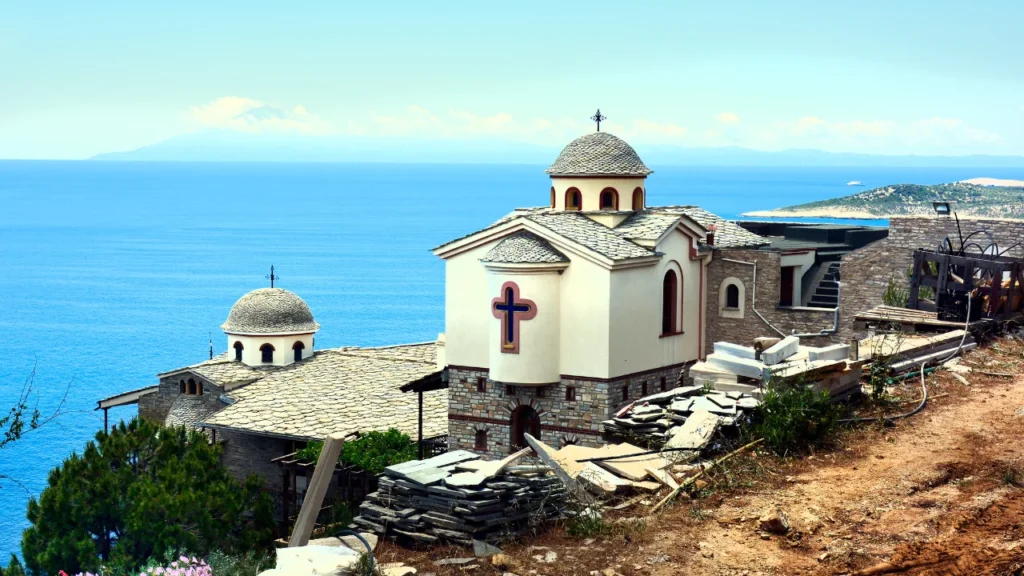
Built precariously on a steep rocky cliff on the southeast coast, the Monastery of Archangel Michael appears to be hanging directly above the sea. It is a site of profound religious tourism that manages to inspire even the most secular visitor. The nuns of the monastery are famously welcoming, often showing travelers where St. Luke is said to have knelt to pray. The panoramic views from the monastery terrace offer a sense of restorative peace that serves as the perfect antidote to the “digital border friction” of the modern world.
7. The Sunken Quarry of Alyki
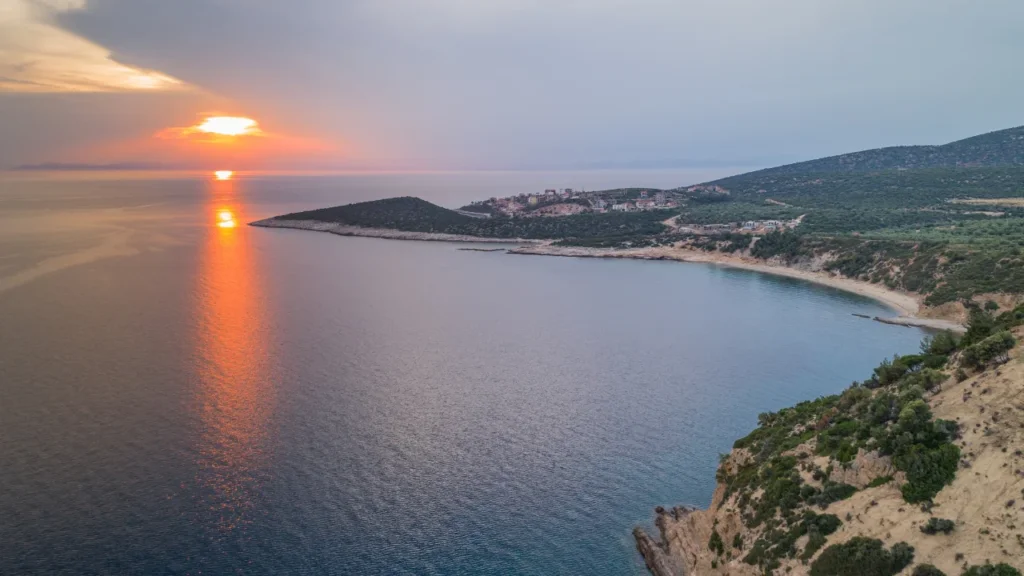
The peninsula of Alyki is perhaps the most visually arresting part of Thassos. Here, the ruins of a temple of Apollo stand near two beautiful, sheltered bays. But the real secret lies at the water’s edge. In ancient times, Thassos was a major exporter of high-quality marble.
At the tip of the peninsula, there is a sunken quarry where the carved marble blocks are still visible beneath the surface. With simple snorkeling gear, a traveler can swim over thousands of years of industrial history. It is a literal “no-filter” look at the island’s wealthy mining past, presented without the need for an app or a QR code.
8. Giola: The Natural Siren of the Coast
Located near the village of Astris, Giola is a natural sea lagoon carved into the rocks. Often called the “Teardrop of Aphrodite,” it is a pool of emerald water separated from the turquoise sea by a narrow strip of stone. Reaching it requires a drive down a rugged dirt track and a short hike, but the sight of the natural basin is a masterclass in the island’s raw beauty. It is a place to practice Fiaka—the Adriatic art of doing absolutely nothing while remaining completely present in the moment.
9. A Trilogy of Beaches: Golden, Paradise, and Marble
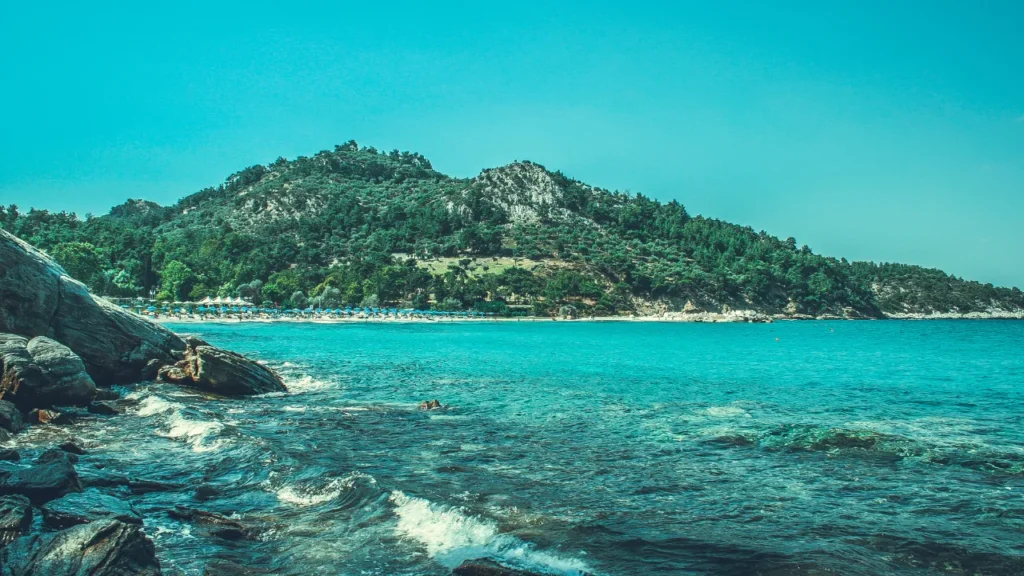
Thassos’s 100km perimeter road connects a spectrum of coastal experiences that satisfy every need for unhurried exploration:
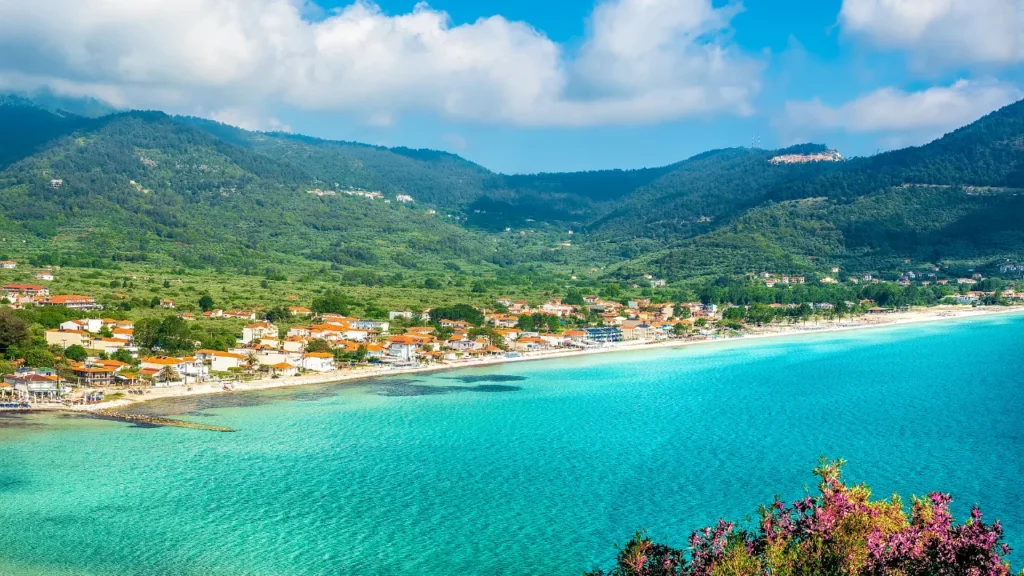
- Golden Beach (Krisi Ammos): A long, gently shelving stretch of sand backed by forested hills. It is the ideal spot for families seeking the “Time-Wealth” of a slow summer day.
- Paradise Beach: Hidden and accessible via a winding path, this beach offers fine sand and waves that feel worlds away from the over-curated beach clubs of the southern islands.
- Marble Beach (Saliara): A unique shore where the “sand” consists of tiny, smooth white marble pebbles. The water here is a startling neon blue, a byproduct of the marble dust, creating a fairytale landscape that defies digital reproduction.
10. The Culinary Journey: Throumba and Liquid Gold
The Thassian diet is a terroir-driven experience that will make the brain feel like it’s “sweating lipids” in the most delicious way possible. The island’s signature product is the Throumba Olive, a variety that has earned a Protected Designation of Origin (PDO). These olives are shriveled by the sun and cured in salt, offering a savory depth that is unmatched.
Equally famous is the Thassian honey (med). Driving through the mountains, one will see small-scale beekeepers selling their jars at roadside stands, often relying on “honesty boxes” for payment. This is the “Community Fussiness” of the Balkans—a culture where people instinctively trust and look out for one another. A meal of fresh seafood—gray mullet or sea bream—paired with local wine and finished with honey-drenched walnuts is the only “biometric” data a traveler truly needs.
11. 2026 Power Traveler Intelligence: Essential Hacks
Navigating the European frontier in 2026 requires more than a map; it requires travel intelligence.
- The Ferry Strategy: Ferries run frequently from Keramoti to Limenas (35 minutes) and from Kavala to Skala Prinos (75 minutes). Always check Ferryhopper.com, as timetables remain “optimistic guidelines” that change with the season.
- The “Paper and Pen” Hack: While younger islanders speak excellent English, the village elders and bus station masters often do not. To avoid a “broken jaw” moment of missed connections, write your destination and time on a slip of paper and confirm it in person the day before.
- The Cash Paradox: Despite the digital trend in Western Europe, the heart of Thassos remains cash-dependent for village markets, roadside honey stands, and smaller tavernas. Take out large sums of Euros in Limenas or Limenaria to avoid high ATM fees in the smaller villages.
- Senior Coverage: For travelers over 70 exploring the rugged interior of Mount Ipsarion, standard insurance often fails. Specialized plans like INF Elite are the gold standard for this unpolished terrain, providing coverage up to age 99.
Conclusion: Reclaiming Your Time-Wealth
Thassos Island, Greece isn’t for the traveler who needs every moment curated and every corner polished. It is for those who value discovery over curation and human ease over digital efficiency. In a year defined by EES digital friction and biometric kiosks, finding a place that still values the unhurried “Skala” logic is the real luxury.
Whether you are scaling the ancient Acropolis, diving into the sunken marble quarries of Alyki, or sharing a plate of Throumba olives with a stranger, Thassos will surprise you in the best way possible. It is unpolished, it is authentic, and it remains one of the most beautiful “Schengen Reprieve” destinations in the Mediterranean.
💬 WE WANT TO HEAR FROM YOU! Are you ready to trade the technical slog of the city for the emerald grit of Thassos? Have you ever had a travel delay saved by the “philoxenia” of a local stranger? Let us know in the comments below!