In an era of overtourism and soaring prices, most travelers are fighting for elbow room on the streets of Paris or paying double for a sunset view in Santorini. But there is a secret known to a growing tribe of “Power Travelers” who prioritize “time-wealth” and authenticity over mass-market trends.
Tucked away in Southeastern Europe lies the Balkan Peninsula—a region that feels like a time capsule, where 13th-century history meets a raw, unpolished charm that locals affectionately call “stupid and I like it that way”. This is the ultimate Balkan travel guide to help you navigate one of the most rewarding and diverse regions on the planet before the rest of the world catches on.
What Exactly are the Balkans?
If you are new to the region, don’t worry—even geographers debate the exact boundaries
. Simply put, the Balkans (derived from the Turkish word for “mountain”) is a massive peninsula in Southeastern Europe
.
While many associate the region solely with the former Yugoslavia, it actually consists of 12 distinct countries: Albania, Bosnia and Herzegovina, Bulgaria, Croatia, Greece (partially), Kosovo, Montenegro, North Macedonia, Romania, Serbia, Slovenia, and Turkey (European side)
. What unites them is a vibrant mix of Ottoman, Mediterranean, and Austro-Hungarian influences that shift with every border crossing
4 Powerful Reasons to Visit the Balkans in 2026
- Unbeatable Affordability
For budget-conscious explorers, the Balkans are a gift. Prices for food, luxury lodging, and activities are often half of what you would pay in Western Europe
. Bulgaria, for instance, sits 40% below the EU average, allowing your travel dollar to stretch twice as far - The “Schengen Reprieve” Strategy
As the 2026 travel season introduces the EU’s new biometric Entry/Exit System (EES), travelers face new “digital friction” and strict 90-day limits
. Most Balkan nations (like Albania and Montenegro) are outside the Schengen zone, offering a vital logistical “easy button” to reset your stay clock while avoiding biometric bottlenecks at major hubs - Raw, “Unfiltered” Authenticity
Unlike the “Instagram-polished” destinations of the West, the Balkans offer Technical Depth. Whether it’s the “caffeine ritual” of unfiltered coffee in a Bosnian bazaar or the primeval forests of Montenegro, the experiences here are 10 times richer because they are real
- “Scientific Comfort” for Mature Travelers
For the Gen Greytt demographic (50+), the region is evolving. Using standards like the Greytt Score™, travelers can now find vetted accommodations that prioritize physical safety, digital connectivity, and accessibility without sacrificing the region’s historic soul
The Best Destinations: Vivid Highlights
Dubrovnik, Croatia: The “Pearl of the Adriatic.” Walk the 16th-century stone walls for views that feel like a cinematic masterpiece
.
Sarajevo, Bosnia and Herzegovina: Known as the “Jerusalem of Europe,” where church bells ring beside minarets and Ottoman bazaars pulse with life
Bay of Kotor, Montenegro: A fjord-like bay where medieval towns are cut into soaring limestone cliffs
Lake Bled, Slovenia: An Alpine fairy tale featuring an emerald lake, a church island, and a cliffside castle
Gjirokastër, Albania: A UNESCO mountain city made of stone, offering a window into a fascinating and unpolished past
Practical Itineraries for Every Explorer
7-Day: The Adriatic Highlights
Day 1-3: Dubrovnik, Croatia. Explore the Old Town and take the cable car for panoramic views
.
Day 4-5: Kotor, Montenegro. Hike the 1,355 steps to St. John’s Fortress for a world-class view
.
Day 6-7: Mostar, Bosnia. Watch the famous bridge divers and enjoy traditional Bosnian coffee
.
10-Day: The Ottoman Blueprint
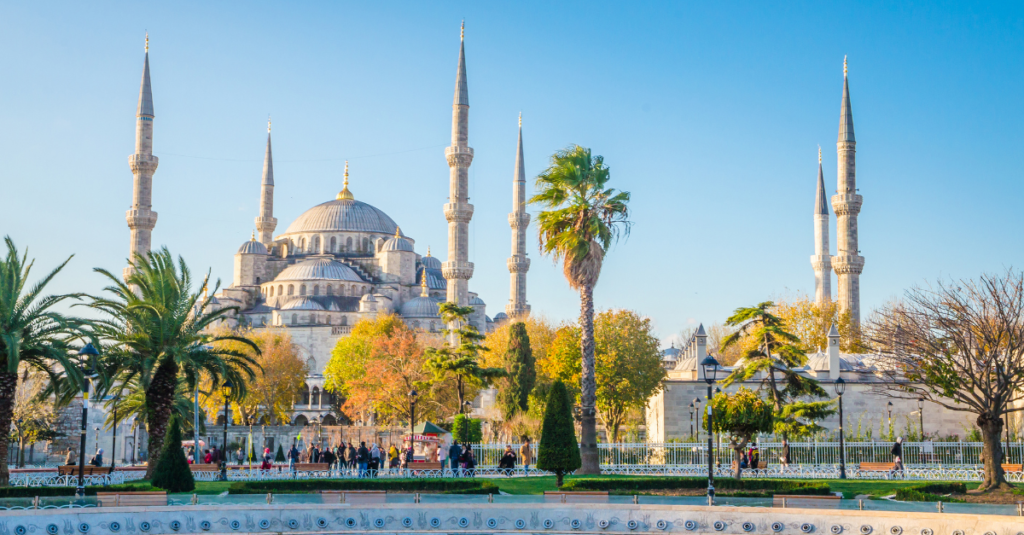
Day 1-3: Istanbul, Turkey. The cultural source. Visit the Blue Mosque and Hagia Sophia [319, Previous Conversation].
Day 4-6: Skopje, North Macedonia. Explore the massive Old Bazaar and the quirky “Skopje 2014” statues
.
Day 7-10: Lake Ohrid. A tranquil retreat with 365 historic churches and crystal-clear water
.
14-Day: The Grand Balkan Loop
Start in Ljubljana/Lake Bled (Slovenia)
, move through the Plitvice Lakes (Croatia)
, down to Sarajevo (Bosnia)
, into the Durmitor National Park (Montenegro)
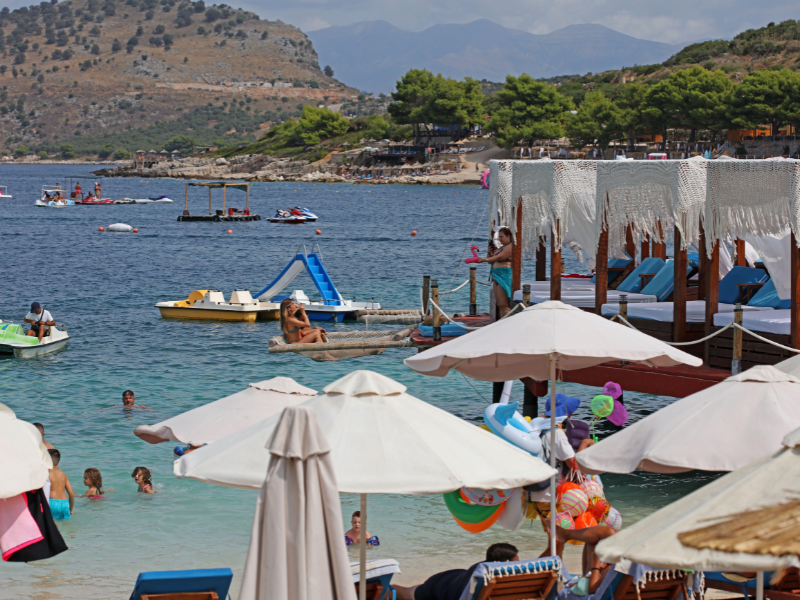
, and finish on the Albanian Riviera in Ksamil
Practical Travel Tips & Intelligence
Budget Ranges
High-end boutique hotels can often be found for under 100/night∗∗,withmid−rangeoptionscloserto∗∗50
. Outside of Croatia and Slovenia, a hearty sit-down meal rarely exceeds $15-20 per person
Safety Insights
The Balkans are generally very safe, with petty and violent crime rates lower than in many Western European capitals
. Use common sense: avoid unlit streets at night and use licensed taxi apps like Bolt
.
Transportation Advice
Buses are your best option. Intercity rail infrastructure is largely underdeveloped and slow
. If you rent a car for a road trip, ensure you have the mandatory “Green Card” insurance, especially if crossing the Neum corridor into Bosnia
The “Senior Coverage Gap”
If you are over age 70, be aware that standard credit card insurance is a “paper shield” that often tapers benefits. Look into specialized plans like INF Elite, which provide medical coverage for seniors up to age 99, including pre-existing conditions
.
Are you ready to claim your “time-wealth”? The Balkans are waiting. Start planning your restorative journey today and discover the Europe that most travelers don’t even know exists