If you are mapping out a route through the Balkans, it is easy to get distracted by the famous coastlines and massive capital cities. But true travelers know that the most unforgettable experiences are hidden slightly off the main tourist trail.
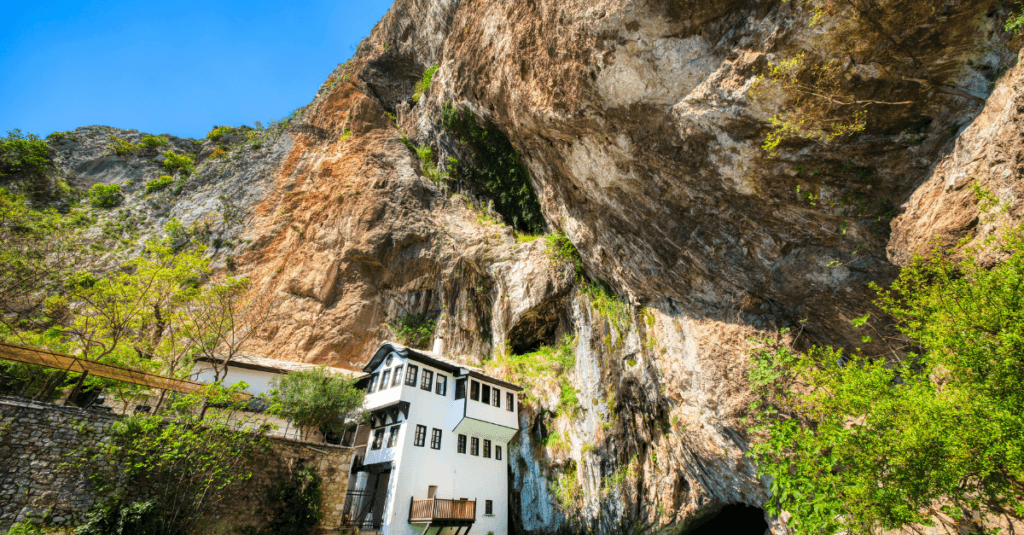
Just a short drive from the famous cobbled streets of Mostar lies one of the most mystical and visually striking locations in all of Bosnia and Herzegovina: Blagaj Tekke (also known as the Dervish House).
Whether you are a road-tripper looking for the perfect scenic detour or a history buff fascinated by Ottoman architecture, this guide will show you exactly how to experience Blagaj Tekke without the stress.
What is Blagaj Tekke?
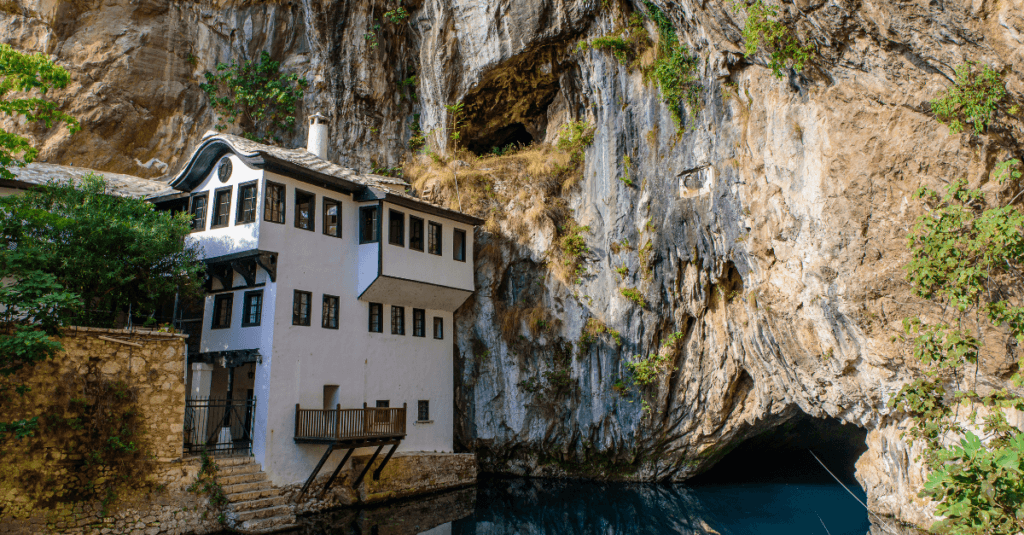
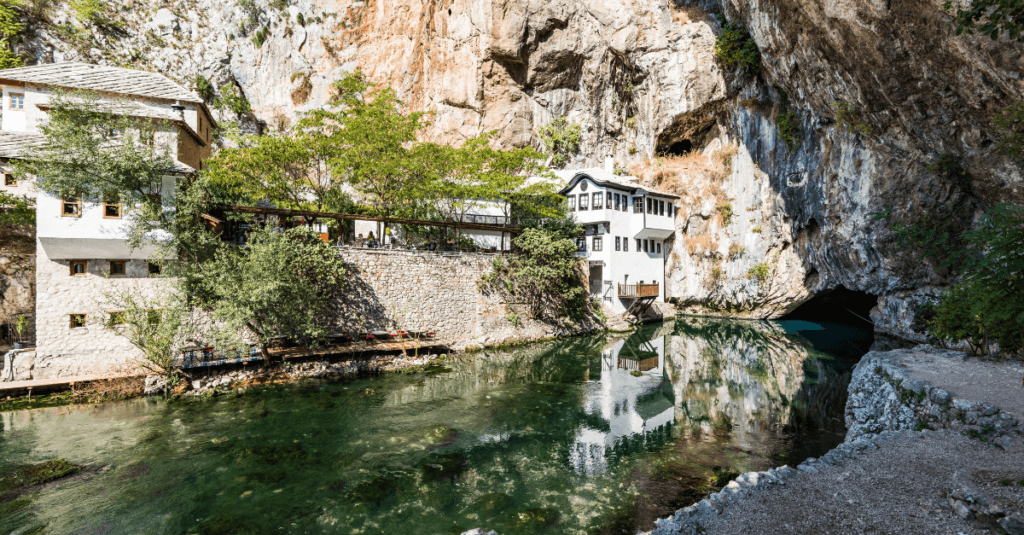
Tucked right into the base of a massive, 200-meter-high sheer limestone cliff, Blagaj Tekke is a nearly 600-year-old Sufi monastery. It was built by Dervish monks in the 16th century during the rule of the Ottoman Empire. The white-washed, half-timbered house sits literally on the edge of the water, creating a postcard-perfect reflection that photographers dream about.
The monastery was strategically placed here for the peace and natural harmony of the location. Today, it stands as a brilliant example of classic Ottoman architecture mixed with Mediterranean flair, operating both as a living religious site and a welcoming cultural monument for visitors.
The Magic of Vrelo Bune (The Buna River Spring)
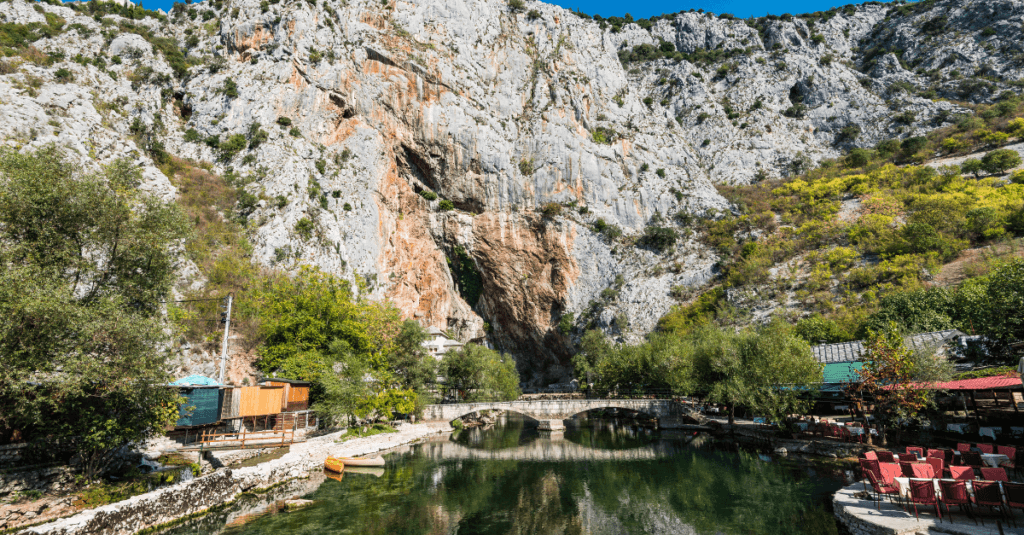
You cannot talk about the Tekke without mentioning the water it sits on. The building rests at the mouth of Vrelo Bune, which is one of the largest and most powerful karst river springs in all of Europe.
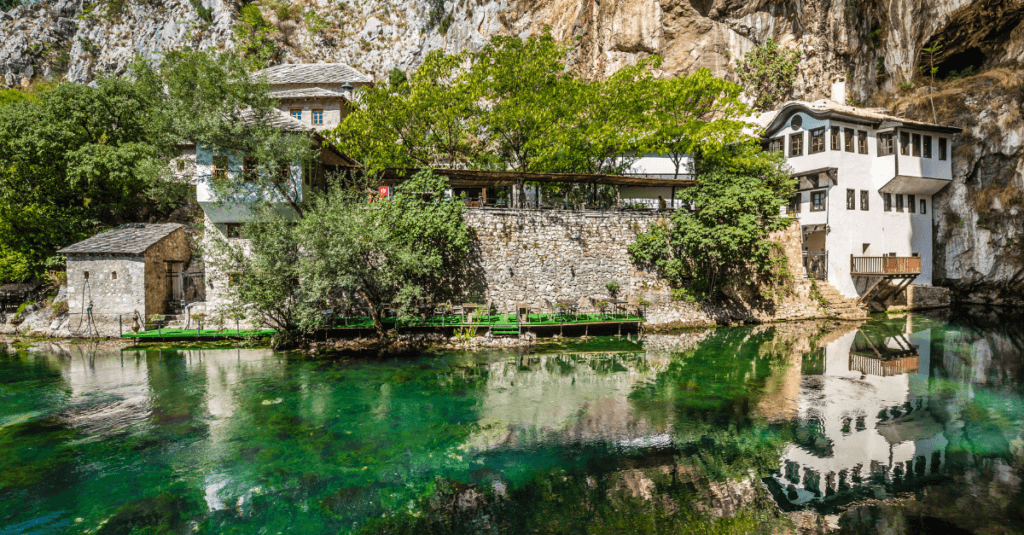
The water flows directly out of a dark, cavernous hole in the cliff face at a staggering rate of 43,000 gallons per second. The water is incredibly clean, ice-cold year-round, and boasts a vibrant emerald-green color that contrasts beautifully against the white stone of the monastery.
How to Get There
Getting to Blagaj is incredibly simple, making it the absolute best day trip from Mostar.
- By Car: Blagaj is only 12 kilometers (about 7.5 miles) southeast of Mostar. The drive takes less than 20 minutes on well-paved roads. There is ample paid parking right before the walking path that leads down to the spring.
- By Bus: If you are traveling on a budget, take local bus number 10, 11, or 12 from the main station in Mostar. Tickets cost around 2 BAM (approx. 1 EUR), and the bus drops you off just a short walk from the site.
- By Tour: Almost every guesthouse and local agency in Mostar offers half-day tours to Blagaj, often combining it with stops at Počitelj and the Kravice Waterfalls.
Essential Tips for Your Visit
1. Respect the Dress Code Because Blagaj Tekke is a sacred Islamic site, modest dress is required to go inside the house. Shoulders and knees must be covered for both men and women. Women are also required to wear a headscarf inside. If you forget, don’t panic—the staff provides free wrap skirts and scarves at the entrance.
2. Drink the Cave Water For a couple of Euros, you can take a small rubber dinghy ride directly into the dark cave where the Buna River originates. The boat guides will often encourage you to cup your hands and drink straight from the river. It is freezing, refreshing, and entirely safe.
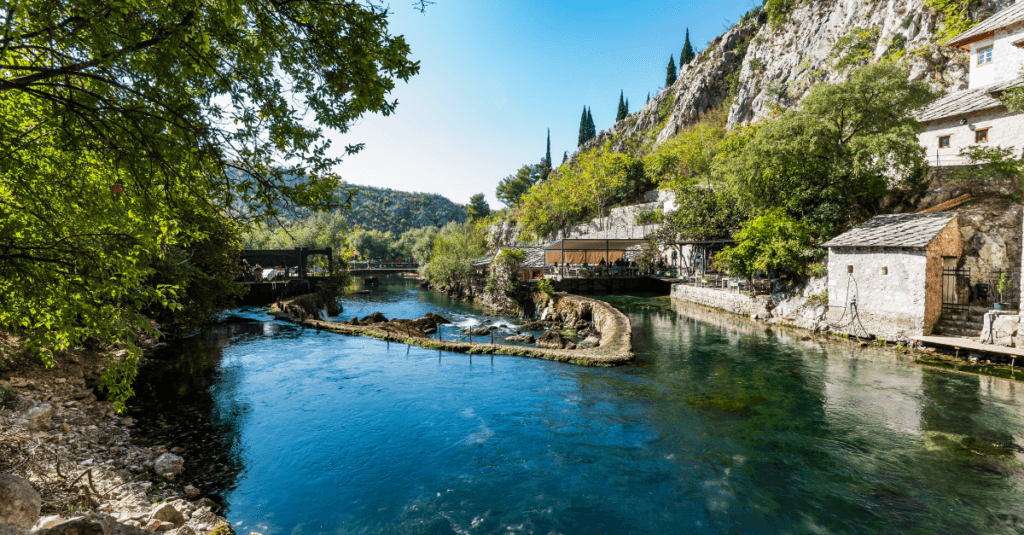
3. Have Lunch on the River The banks of the Buna River are lined with outdoor restaurants featuring terraces built right over the rushing water. While touristy, the experience is highly recommended. The local specialty is fresh river trout (pastrmka). Order a plate of grilled fish, grab a Bosnian coffee, and enjoy the sound of the cascading water.
4. Beat the Crowds To get the best photos and experience the serene atmosphere the monks originally intended, arrive early. Aim to be there around 8:30 AM or 9:00 AM. By midday during the summer, the narrow pathways become heavily congested with regional tour groups.
Is it Worth the Hype?
Absolutely. Blagaj Tekke is more than just a quick photo op. It is a place where raw natural power meets centuries of quiet, spiritual history. As we continue exploring the best corners of the peninsula, destinations like this prove exactly why the Balkans remain Europe’s most captivating region. Add it to your itinerary—you won’t regret it.