Have you ever stood in a place so remarkably preserved and breathtakingly high up that you felt like you had clipped straight through the edge of the modern map?
When most travelers think of Roman ruins in Turkey, their minds immediately drift to the sun-baked, crowded marble streets of Ephesus or the coastal columns of Side. And while those iconic sites are undeniably magnificent, they share one major, unavoidable drawback: you are sharing them with thousands of other people, fighting shoulder-to-shoulder just to snap a single photograph without a glowing smartphone screen blocking your view.
If you crave an authentic, Indiana Jones-level sense of discovery, you need to turn your steering wheel away from the crowded coastlines and drive straight up into the jagged peaks of the Taurus Mountains. You need to visit the ancient city of Sagalassos.

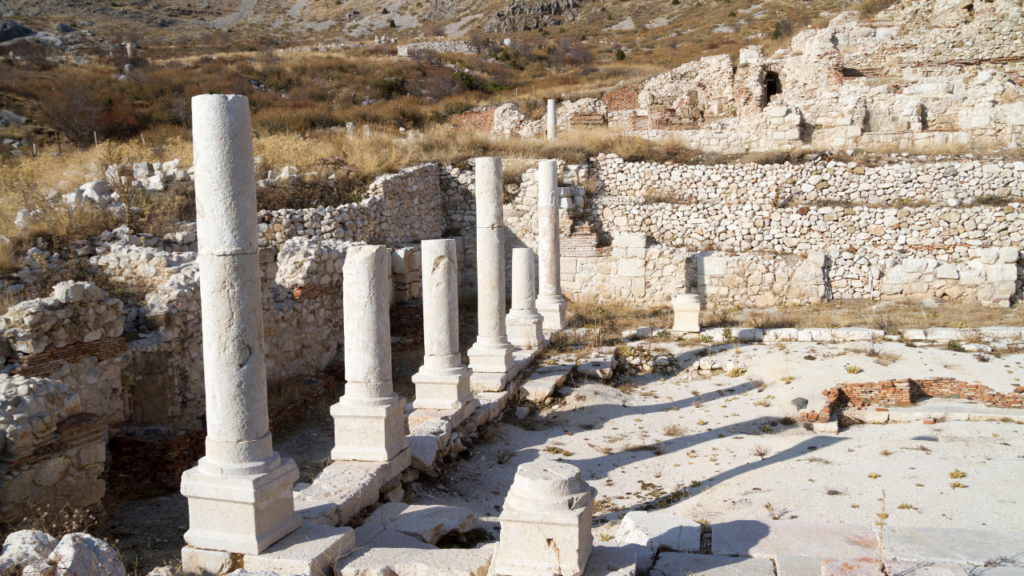
Often dubbed the “Machu Picchu of Turkey,” Sagalassos is a staggering archaeological wonder suspended between 1,450 and 1,700 meters above sea level. It sits dramatically on the craggy, exposed slopes of Mount Akdağ in Burdur province, quietly waiting for intrepid travelers willing to make the upward trek. This is a rare, magical place where actual, drinkable mountain spring water still flows through 1,800-year-old Roman fountains, and where the profound silence of the high-altitude air is broken only by the wind whistling through ancient amphitheaters.
In this comprehensive travel guide, we are diving deep into why Sagalassos Turkey deserves the absolute top spot on your Mediterranean itinerary, exploring the fierce hidden history of Pisidia, and unpacking the five ultimate secrets of this awe-inspiring cloud city.
Secret 1: The Miraculous Antonine Fountain
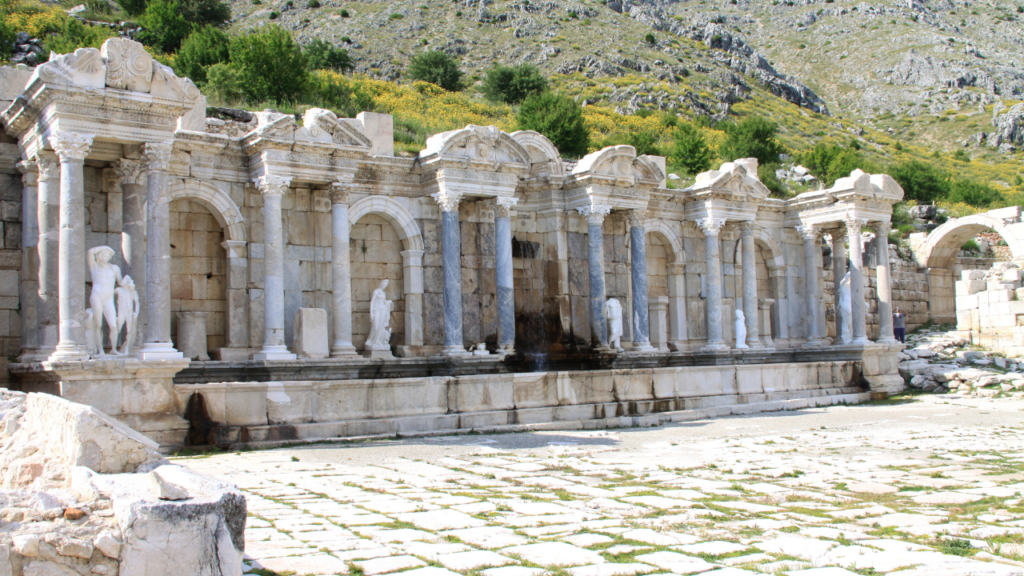
If there is one singular reason why history buffs and adventurous travelers make the steep pilgrimage up to Sagalassos, it is the Antonine Nymphaeum. Prepare to have your breath taken away.
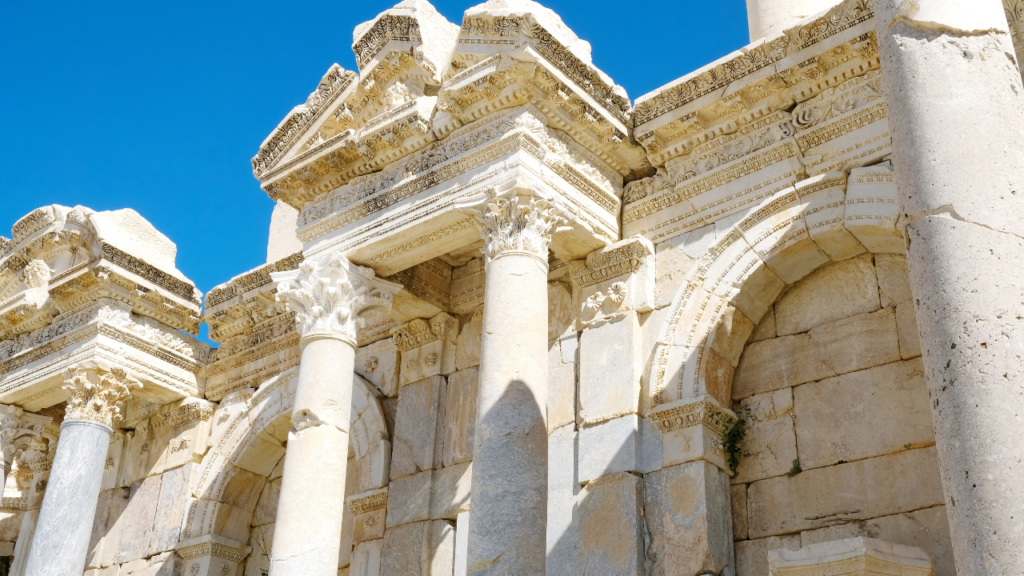
Built between 160 and 180 AD during the height of the Roman Empire’s prosperity, this monumental fountain is not just a pile of dusty, dry stones. Thanks to an incredibly meticulous restoration project led by a Belgian archaeological team in the 1990s and 2000s, the Antonine Fountain has been returned to its former glory. And the most mind-blowing part? The water is actually flowing again.
Stretching an impressive 28 meters long and soaring 9 meters high, the fountain was crafted using seven different colors of stone, including dazzling Afyon marble that seems to shift in tone depending on the angle of the sun. The structure is supported by thick, intricately carved columns—including striking blue marble pillars in the center—that frame the cascading waterfalls.
Standing in the Upper Agora, listening to the rushing sound of the water clashing into the massive Roman pool, is a deeply emotional experience. You aren’t just looking at history through a pane of museum glass; you are hearing the exact same sounds, seeing the exact same light plays, and feeling the exact same icy spray of the mountain spring that a Roman merchant would have experienced nearly two millennia ago. You can even cup your hands and drink the ice-cold, crystal-clear water to cool off from the intense Turkish sun. It is a profound, visceral connection to the past that very few archaeological sites on earth can offer.
Secret 2: The World’s Most Dramatic Grand Theater
The ancient urban planners of Sagalassos clearly did not believe in taking the easy way out. Nowhere is this more apparent than in the city’s Grand Theater, which is widely considered one of the highest-altitude ancient theaters in the entire world.
Constructed around 180 to 210 AD, the theater could comfortably seat an astonishing 9,000 spectators. But it isn’t just the sheer size that makes this structure a marvel; it is the terrifying, awe-inspiring placement of the building. The classical Hellenistic, horseshoe-shaped auditorium was carved directly into the natural slope of the mountain. If you stand on the top tier of the stone bleachers, you are treated to a panoramic, uninterrupted vista of the valley below, stretching out toward the horizon.
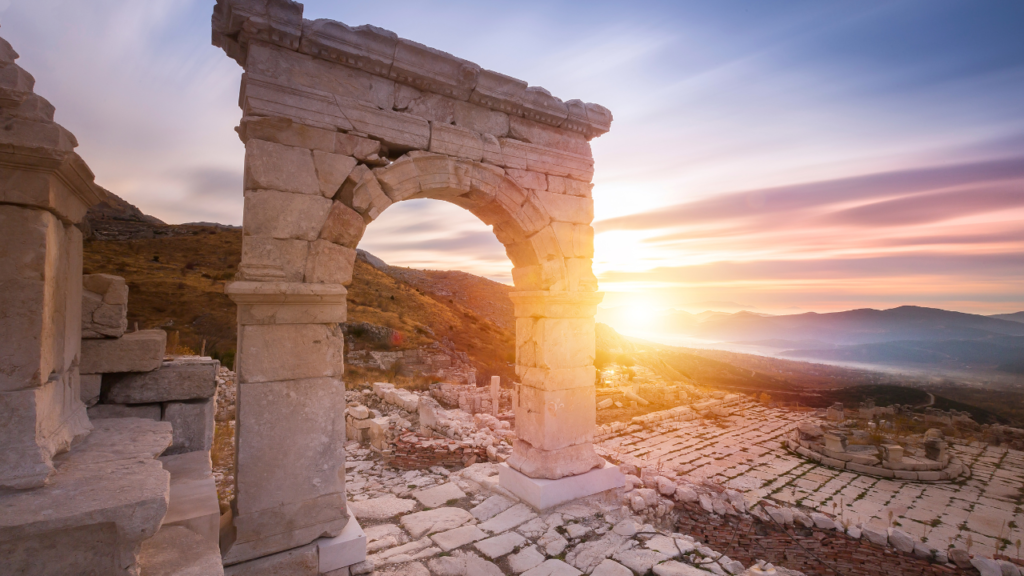
However, if you look behind the single-story stage building, you’ll notice a sheer, dizzying drop-off. The acoustics here are so perfectly engineered that a whisper on the stage can be heard clearly from the highest seats, cutting right through the mountain winds.
The placement of the theater also serves as a historical monument in its own right. It faces the exact hillside where Alexander the Great famously clashed with the fierce, warlike Sagalassian forces in 333 BCE. The locals of Pisidia were renowned for their combat skills, and taking this mountain stronghold was no easy feat even for history’s greatest conqueror. Sitting on the warm stone steps of the theater today, you are essentially gazing out over an ancient battlefield.
Secret 3: The Untouched Agoras and the Imperial Baths
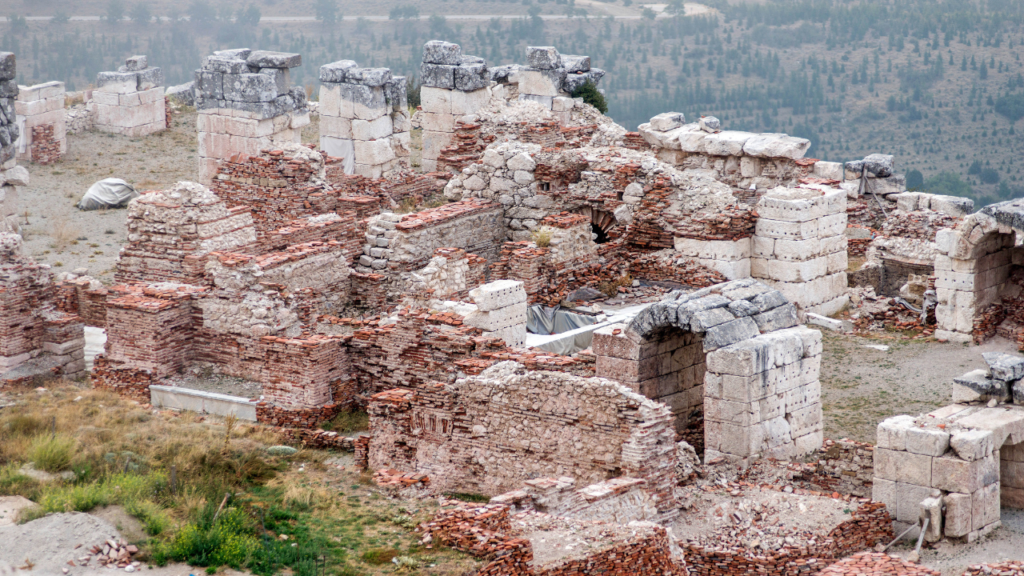
Because Sagalassos was repeatedly devastated by massive earthquakes in the 6th and 7th centuries—and subsequently ravaged by a plague epidemic—the survivors eventually abandoned the high altitudes and moved down into the valley to form the modern town of Ağlasun. Over the centuries, layers of mud and erosion gently blanketed the ruined city, effectively sealing it in a protective time capsule. Unlike coastal ruins that were pillaged for building materials over the centuries, Sagalassos was simply left alone.
Because of this geological luck, the Upper and Lower Agoras (the commercial and political hearts of the city) are phenomenally well-preserved. As you wander through the ruins, you can vividly picture the thriving daily life of the ancient citizens.
You’ll discover the Macellum, a circular food market where merchants once shouted out prices for fresh produce, and the sprawling Imperial Baths complex. Built between 10 and 30 AD, these massive Roman baths spanned 32 by 40 meters, featuring the traditional separation of the frigidarium (cold pool), tepidarium (warm room), and caldarium (hot room).
Don’t miss the Heroon, an intricately decorated shrine tucked against the mountain slope, featuring a beautiful, continuous frieze of dancing girls. The level of detail preserved in the stone carvings here is staggering, offering an intimate glimpse into the artistic soul of the Hellenistic and Roman eras.
Secret 4: “Roman Leg Day” and the Mountain Microclimate
Let me level with you: visiting the ancient city of Sagalassos is an active endeavor. The city is laid out across dramatic, naturally occurring terraces, meaning that exploring the site requires walking up steep, uneven stone pathways. Think of it as the ultimate Roman leg day.
You will sweat, your calves will burn, and you will absolutely love every single second of it.
But why did the ancient people build a massive, heavy marble metropolis in such an unforgiving, vertically challenging location? The answer boils down to two things: security and sustenance. The steep slopes provided a natural, easily defensible fortress against invading armies, while the mountain itself was bursting with natural, fresh-water springs and surrounded by highly fertile soil. It was the perfect, albeit physically demanding, place to build an empire.
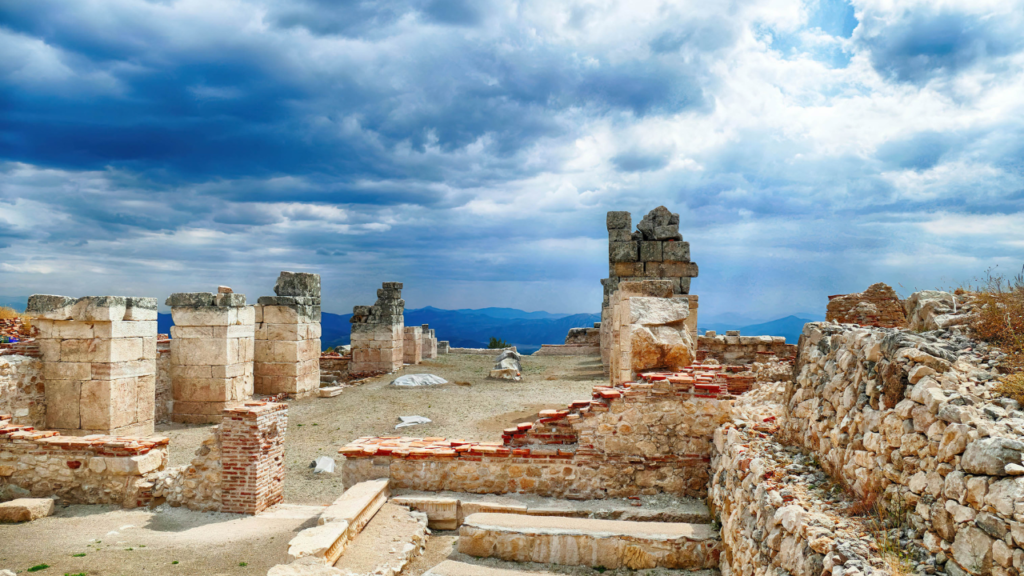
Because of this altitude, the weather in Sagalassos is a unique microclimate. Even in the dead of the sweltering Turkish summer, the treeless, exposed ruins can suddenly become incredibly windy, and thick, dramatic clouds can roll in out of nowhere to blanket the peaks. This is exactly why it earned the moniker of the “Cloud City.” You can literally be walking through the Lower Agora in bright sunshine, only to find the Upper Agora swallowed by a mysterious, cinematic mist ten minutes later.
Secret 5: The Eerie Solitude and Feline Guardians
Perhaps the greatest secret of Sagalassos Turkey is what you won’t find there: crowds.
Because it requires a bit of a detour from the standard coastal tourist loop, massive commercial tour buses generally skip it. On many days, especially if you arrive early in the morning or later in the afternoon, you might find yourself to be one of only a handful of people wandering through an entire ruined metropolis.
This isolation allows for a deeply emotional, introspective travel experience. You can sit on a fallen column for an hour, sketching or journaling, without a single person interrupting your view.
You won’t be entirely alone, however. Like many historical sites in Turkey, Sagalassos is guarded by a small, friendly population of local cats. These unofficial, furry tour guides are known to happily trot alongside visitors, leading the way up the steep wooden pathways and lounging dramatically on the sun-warmed Roman marble. It adds a wonderful layer of charm and personality to the rugged mountain wilderness.
Practical Guide: How to Visit Sagalassos Turkey?
If you are convinced that this off-the-beaten-path marvel needs to be on your bucket list, here is everything you need to know to make the trip a success.
Getting There: Sagalassos is located about 100 kilometers north of Antalya, making it a perfect, albeit long, day trip. The drive takes roughly two hours. If you are renting a car, avoid using the “shortest route” suggested by GPS maps, as they can sometimes lead you down treacherous, unpaved old mountain roads. Instead, route your GPS to the town of Ağlasun first, and from there, follow the well-paved, winding 7-kilometer road up to the archaeological site.
+2
What to Pack: Because the terrain is rugged, sturdy walking shoes or hiking boots are an absolute non-negotiable. Leave the flip-flops at the hotel. Since the weather at 1,700 meters can be fiercely unpredictable, dress in layers. Bring a light sweater or windbreaker even in July, as the mountain winds carry a bite. Finally, bring a refillable water bottle—you can literally fill it up at the Antonine Fountain!
Travel Protection: Since you’ll be driving winding mountain roads and hiking steep, ancient, and uneven ruins at a high altitude, having solid travel coverage is a no-brainer. Traveling with a reliable, digital-nomad-friendly insurance provider like SafetyWing is highly recommended for these kinds of adventurous detours. It covers the unexpected hiccups so you can focus entirely on enjoying the history, taking the anxiety out of the equation.
Best Time to Visit: The site is open year-round, but due to heavy snowfall in the winter, the access roads can occasionally be impassable between December and March. The absolute best time to visit is during the shoulder seasons of May to June, or September to October, when the weather is mild and the mountain air is crisp. If you visit in the peak of summer, aim to arrive right when the gates open at 8:30 AM to beat the midday heat.
The Final Verdict
Sagalassos Turkey is more than just a collection of old stones; it is a testament to human ambition, engineering brilliance, and the relentless power of nature. It challenges you physically with its steep inclines, rewards you visually with unmatched panoramic views, and moves you emotionally with its whispering, watery echoes of the Roman Empire.
If you are planning a trip to Turkey, do yourself a favor: step away from the crowded beaches for just one day, drive up into the clouds, and discover the magic of Pisidia for yourself.