Picture this: You are gripping the steering wheel as your car hugs the curves of a dramatic mountain pass. To your left, limestone peaks pierce the sky. To your right, an emerald-green river carves its way through a deep, rugged canyon. You crack the window, and the crisp Balkan air rushes in.
Forget the overcrowded tourist traps of Western Europe. If you crave raw beauty, complex history, and unfiltered adventure, a road trip Bosnia and Herzegovina is exactly what your soul needs.
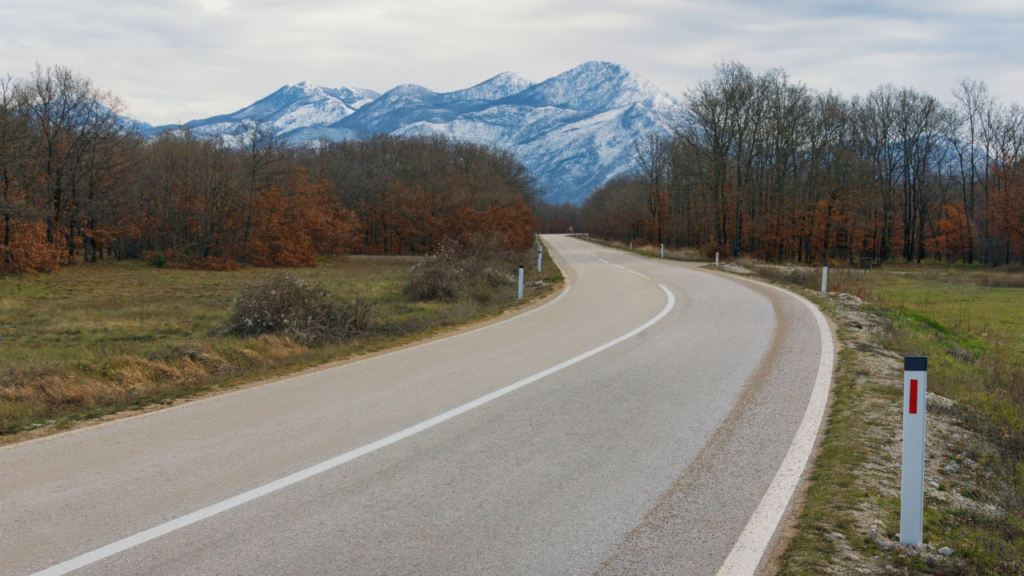
Driving through Bosnia and Herzegovina feels like flipping through the pages of a forgotten history book. It is a place where East meets West, where ancient Ottoman bazaars sit just blocks away from Austro-Hungarian facades, and where nature remains fiercely untamed. But let us get one thing straight: driving here is not an autonomous, cruise-control kind of ride. You will share winding roads with slow-moving tractors, dodge the occasional flock of sheep, and navigate tunnels carved straight through mountains. It is wildly unpredictable—and that is exactly why you will love it.
If you are ready to explore the Balkans’ most underrated gem, buckle up. Here are the 5 epic stops you absolutely must make on your Bosnia and Herzegovina road trip.
1. Sarajevo: The Cultural Heartbeat of the Balkans
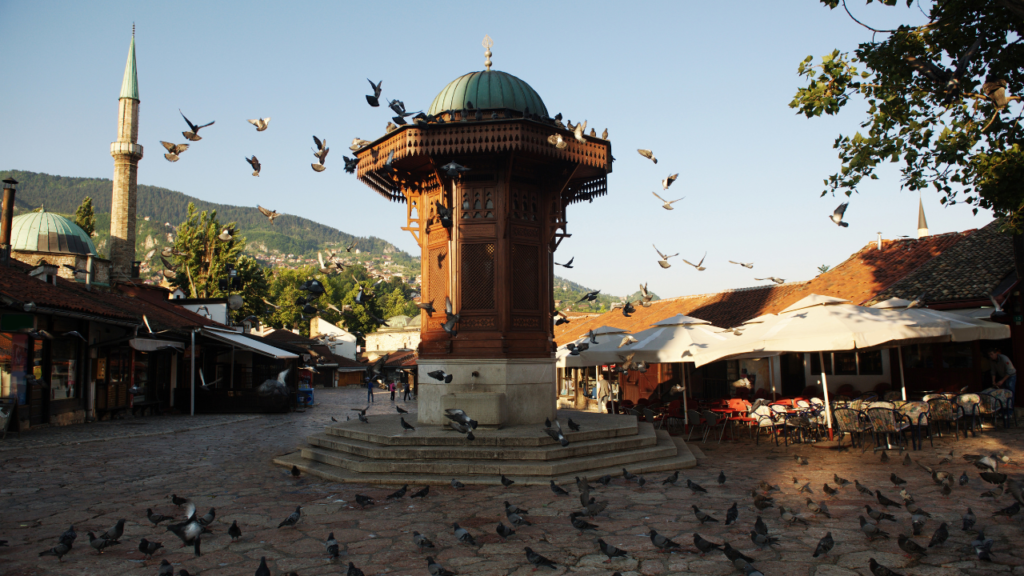
No road trip Bosnia and Herzegovina itinerary can legally start anywhere but the capital. Nestled in a valley surrounded by the Dinaric Alps, Sarajevo is a city that wears its scars and its triumphs openly.
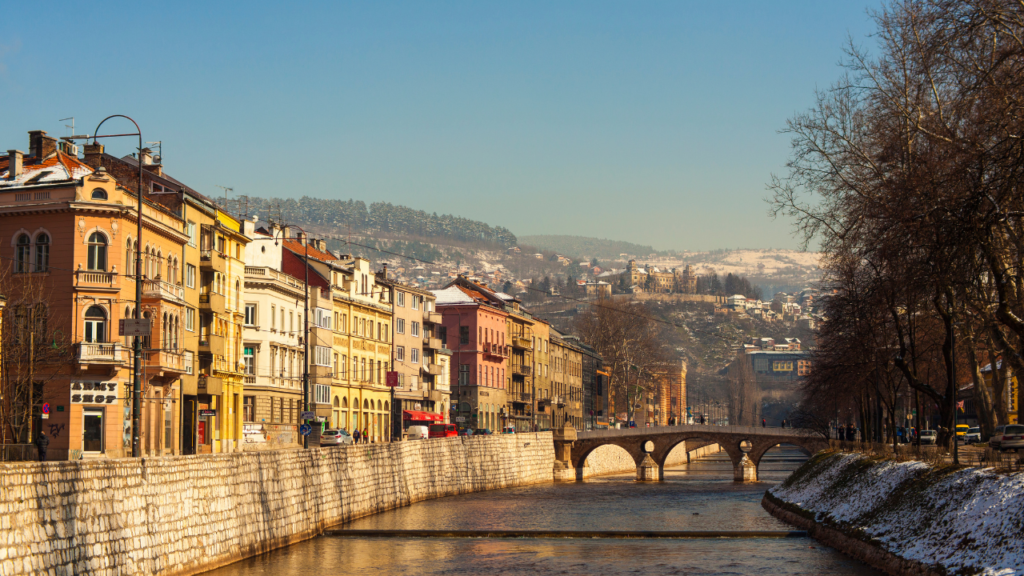
When you drive into the city, the first thing you notice is the skyline: minarets of historic mosques share the horizon with the spires of Catholic and Orthodox churches, earning Sarajevo the nickname “The Jerusalem of Europe.”
What Makes It Epic? The historical weight here is palpable. Park your car (preferably at your accommodation, as driving in the narrow old town streets is a test of nerves) and hit the pavement. Walk to the Latin Bridge, the exact spot where Archduke Franz Ferdinand was assassinated in 1914, sparking World War I.
But Sarajevo is not just about the past; it is about vibrant, resilient life. Head to Baščaršija, the old Ottoman bazaar. The air here smells of charcoal, roasting meat, and strong coffee.
Epic Stop Specifics:
- Fuel Up: You cannot leave without eating ćevapi—small grilled minced meat sausages served inside soft somun bread with raw onions. Grab a portion at Ćevabdžinica Željo.
- Caffeine Kick: Drink traditional Bosnian coffee. Do not call it Turkish coffee! Sip it slowly from the copper džezva, bite into a sugar cube, and watch the world go by.
- Nuanced History: Visit the Sarajevo Tunnel of Hope. During the 1990s siege, this 800-meter hand-dug tunnel was the city’s only lifeline to the outside world. It is a sobering, profoundly moving experience that adds deep context to your trip.
2. Mostar: The Bridge That Unites
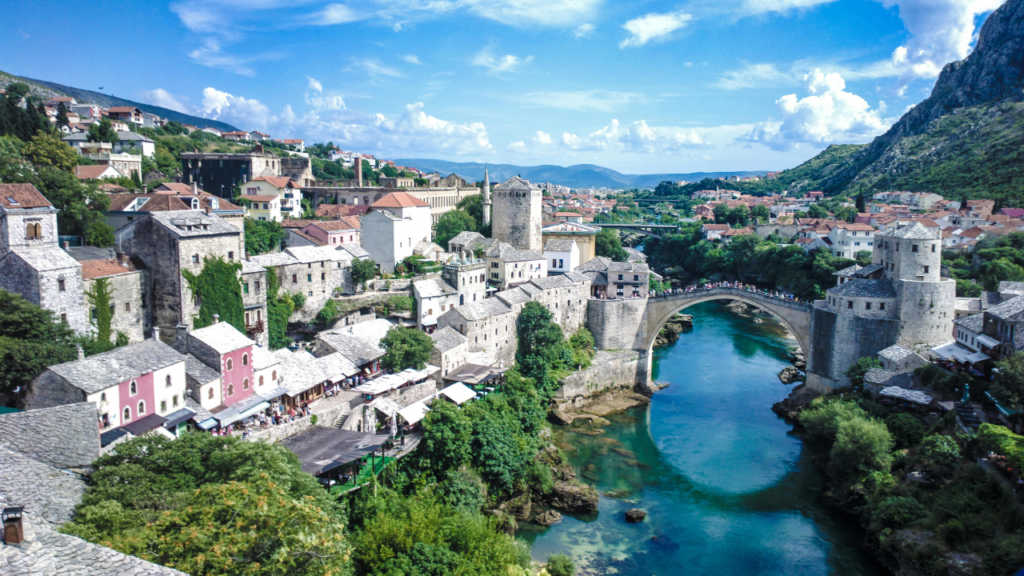
Leaving Sarajevo, you will drive southwest along the E73/M17 highway. Let me tell you right now: this two-hour drive along the Neretva River Canyon is easily one of the most stunning drives in all of Europe. The water is a shade of turquoise so vivid it looks photoshopped. Pull over. Take photos. Breathe it in.
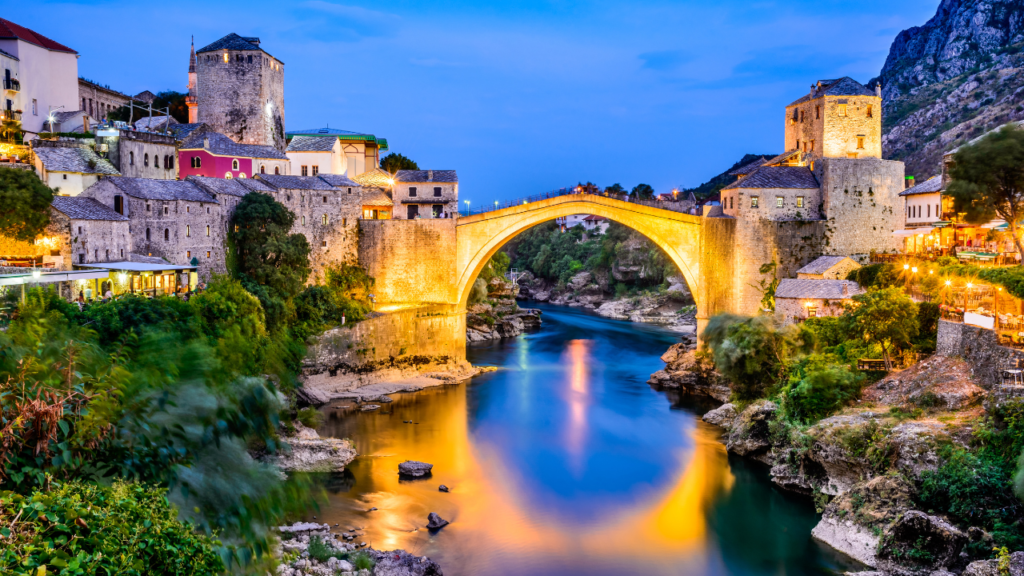
Soon, you will arrive in Mostar, the undisputed star of the Herzegovina region.
What Makes It Epic? The Stari Most (Old Bridge). Originally built by the Ottomans in the 16th century, this swooping stone arch stood for 427 years before being destroyed during the Croat-Bosniak war in 1993. Rebuilt meticulously in 2004 using original local stone, it stands today as a powerful symbol of reconciliation.
- The Dive: If you are lucky, you will catch members of the local diving club plunging 24 meters (nearly 80 feet) off the bridge into the freezing Neretva River below. It is a heart-stopping tradition dating back to 1664. (And no, do not try it yourself unless you want your road trip to end in a Bosnian hospital).
- Wander the Cobblestones: Stroll through the Kujundžiluk (the old bazaar). The slippery, polished cobblestones demand good footwear. Pick up intricate copperwork or vibrant Turkish-style lamps.
- Sunset Views: Walk down to the riverbank right beneath the bridge just before sunset. The golden hour light hitting the white stone of Stari Most is a photographer’s ultimate dream.
3. Blagaj Tekke: The Mystical Dervish House
Just a short 15-minute drive from Mostar lies a place so serene it feels lifted from a fantasy novel. Blagaj (pronounced Blah-guy) is a small village famous for two things: the source of the River Buna and a 600-year-old Dervish monastery.
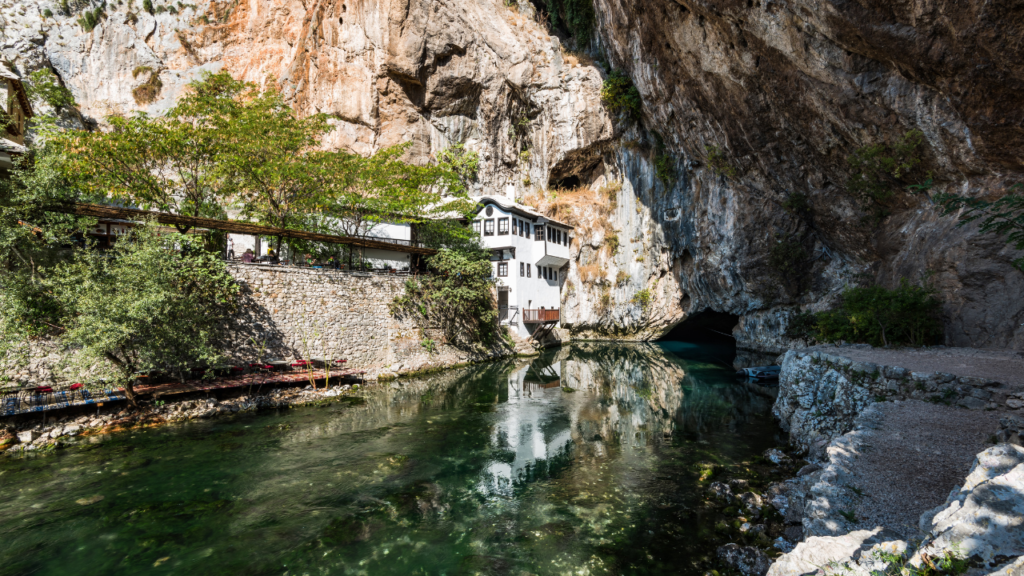
What Makes It Epic? The Buna River literally erupts from a massive, 200-meter-high cliff face. It is one of the largest and most powerful karst springs in Europe. Tucked right into the rock next to this roaring emerald water is the Blagaj Tekke, a Sufi monastery built in 1520. The combination of ancient white Ottoman architecture against the sheer vertical rock and the rushing river is mesmerizing.
- Step Inside: You can tour the Tekke for a small fee (around 10 BAM / 5 EUR). Feel the cool air radiating from the cave, admire the intricately carved wooden ceilings, and soak in the centuries of quiet meditation that happened within these walls.
- Eat the Catch: The icy waters of the Buna River are perfect for trout. Sit at one of the riverside restaurants right across from the monastery. Order the whole grilled local trout. Listening to the rushing water while eating perfectly seasoned, fresh fish is an experience you will not easily forget.
4. Kravice Waterfalls: Nature’s Amphitheater
Keep heading south, driving deep into the sun-drenched Herzegovina region. About 40 kilometers from Mostar, hidden among the green forests, you will hear the roar of water before you see it. Welcome to Kravice Waterfalls.
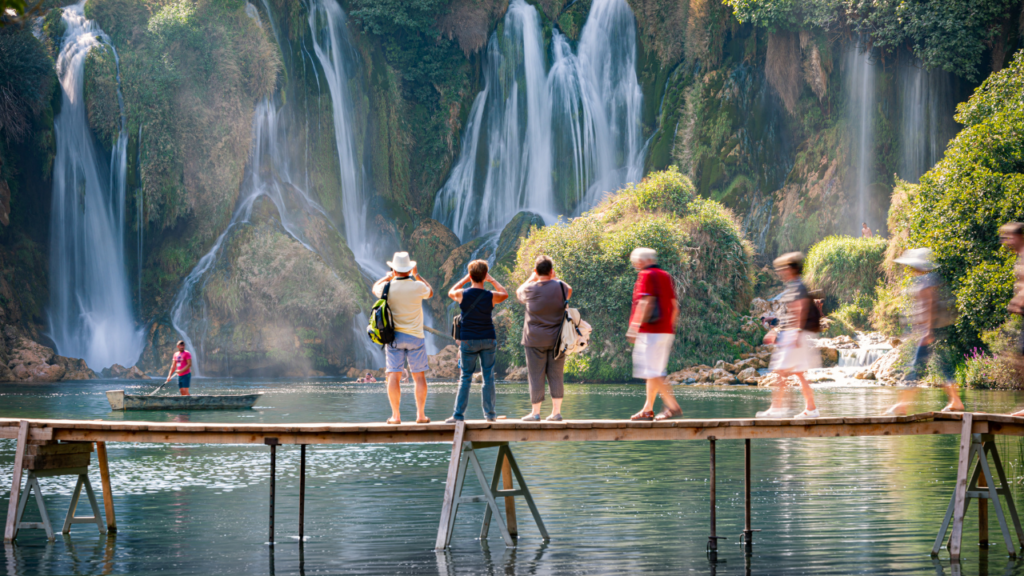
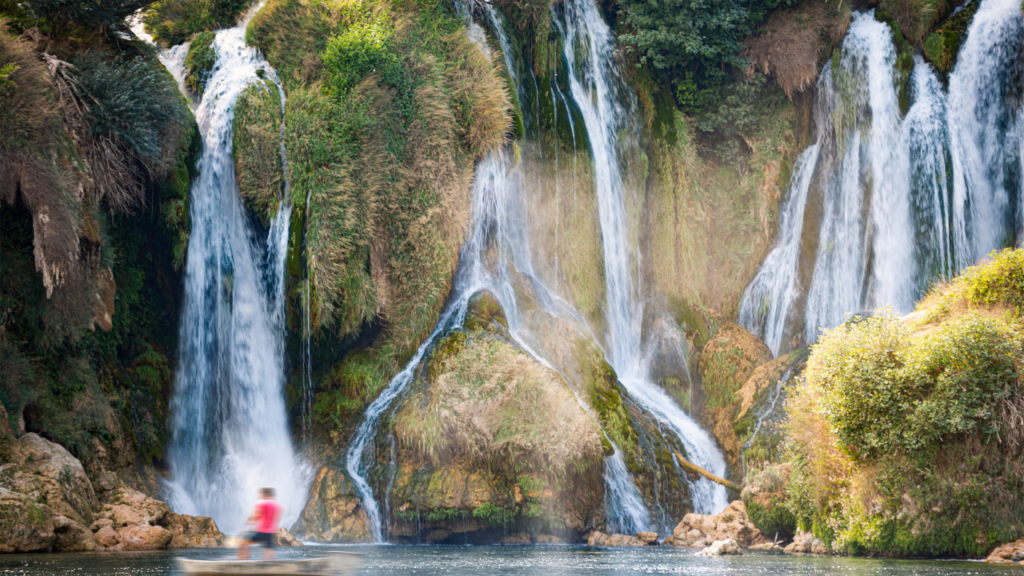
What Makes It Epic? Imagine a mini-Niagara Falls, completely surrounded by lush fig trees, poplars, and emerald greenery. The Trebižat River cascades over a 25-meter-high limestone tufa wall, forming a massive natural amphitheater of waterfalls that span 120 meters across.
While Plitvice Lakes in neighboring Croatia gets all the international fame (and the massive crowds), Kravice offers a wilder, more relaxed vibe. Plus, unlike Plitvice, you are actually allowed to swim here!
- Take the Plunge: The water is notoriously chilly, even in the dead of August. But after a few hours of driving in the Balkan heat, diving into the natural pool beneath the falls is the ultimate shock to the system.
- Chill Factor: Pack a towel and arrive early. You can rent a lounger by the water, grab a cold Sarajevsko beer from one of the rustic wooden cafes along the bank, and let the mist cool your face.
- Pro Tip: Entrance fees vary by season but expect to pay around 20 BAM (10 EUR) in the peak summer months. It is worth every single penny.
5. Jajce: The City of Falling Water and Kings
For our final epic stop, we are steering the car northwest into Central Bosnia. The drive takes you through dense pine forests, dramatic valleys, and sleepy villages where time seems to have stopped. Eventually, you will arrive at Jajce (pronounced Yayt-seh), a town that quite literally sits on top of a waterfall.
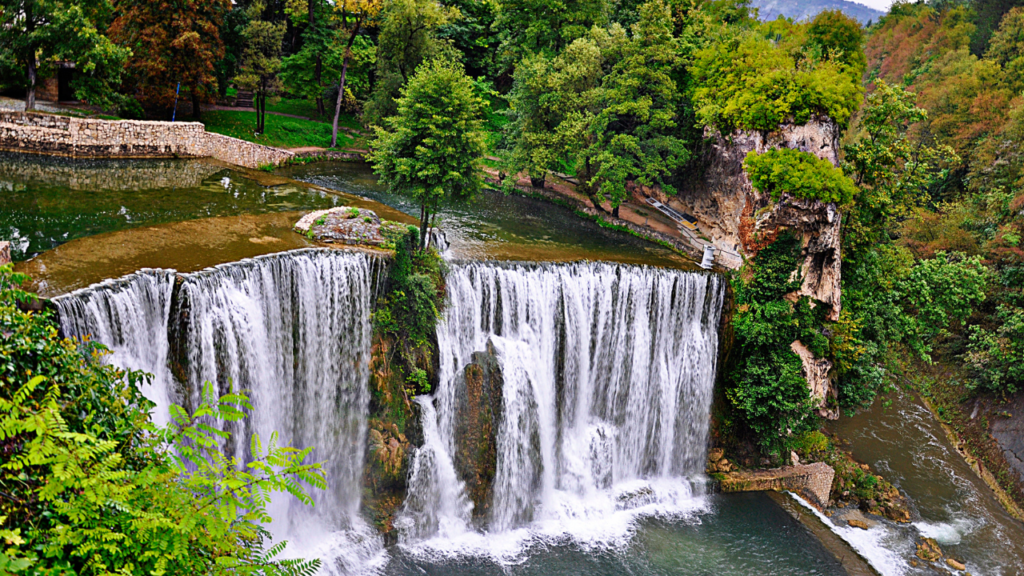
What Makes It Epic? How many towns in the world have a massive, 22-meter waterfall smack in the dead center of the city? Not many. In Jajce, the Pliva River plummets directly into the Vrbas River right below the medieval town center.
Historically, Jajce was the capital of the independent Kingdom of Bosnia in the 15th century. It is a place heavily fortified with history, featuring a hilltop citadel, catacombs, and ancient gates.
- Feel the Spray: Walk down to the viewing platform at the base of the Pliva Waterfall. You will get wet from the mist, but the raw power of the water crashing right in front of you is staggering.
- Explore the Fortress: Hike up the steep cobbled streets to the Jajce Fortress. The panoramic views of the surrounding mountains and the patchwork of red rooftops below are stunning.
- The Watermills: Drive just a few kilometers outside the town to the Pliva Lakes. Here, you will find a collection of 20 tiny, wooden watermills dating back to the Middle Ages. Built on stilts over the gushing water, they look like hobbit houses constructed by beavers. It is eerie, beautiful, and the perfect spot to stretch your legs.
The Ultimate Guide: Driving in Bosnia and Herzegovina
Before you throw your bags in the trunk and blast the ignition, let us talk logistics. A road trip Bosnia and Herzegovina requires a bit of practical know-how. You are not driving the autobahn here.
1. The Border and The Green Card
Bosnia and Herzegovina is not in the European Union, nor is it in the Schengen Zone. You will encounter hard border checks. Have your passport ready. Most importantly, if you are renting a car in neighboring Croatia or Serbia, you must ensure you have a “Green Card” (cross-border insurance card) that covers Bosnia. Border guards will check this. If you do not have one, you will be forced to buy expensive temporary insurance at the border, or worse, be turned around.
2. Road Conditions and Driving Habits
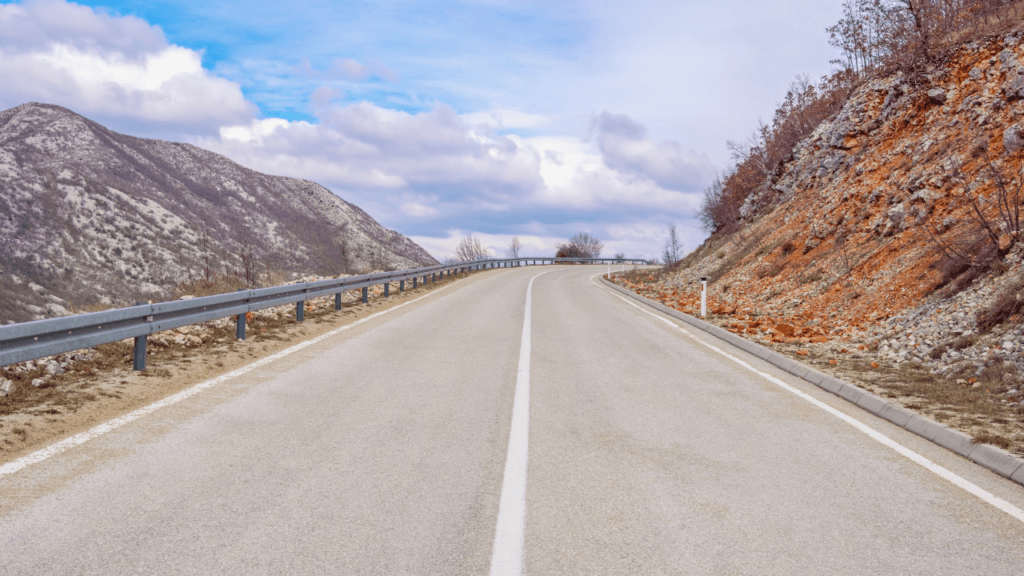
The main highways (usually labeled with an ‘M’) are generally in good condition, paved, and safe. However, there is hardly a straight road in the country. The topography is aggressively mountainous.
- Speed Limits: 50 km/h in built-up areas, 80 km/h on open roads, and 130 km/h on the very few stretches of actual motorway.
- Speed Traps: The local police absolutely love speed traps. They frequently wait with radar guns right at the entrance of small villages. Stick to the limit.
- Passing: Locals tend to overtake on blind corners with a level of confidence that defies physics. Drive defensively. If someone is riding your bumper, pull over slightly when safe and let them fly past.
3. Navigation and Connectivity
Do not rely entirely on Google Maps. While it works well in cities, it has a nasty habit of routing drivers down unpaved logging roads in rural areas just to save two minutes. Stick to the main signs. Also, since Bosnia is outside the EU, your European roaming data will likely cost you a fortune. Download offline maps via Google Maps or Maps.me before you cross the border, or buy a local prepaid SIM card (BH Telecom or Mtel) at a gas station.
4. Cash is King
The local currency is the Bosnian Convertible Mark (BAM or KM). The exchange rate is firmly pegged to the Euro (1 EUR = 1.95 BAM). While hotels and larger gas stations take credit cards, small cafes, bakery stands selling burek (meat pastries), and parking attendants deal strictly in cash. Keep a stash of small bills on you.
Why This Trip Will Change You
There is something inherently profound about a road trip Bosnia and Herzegovina. Maybe it is the contrast. You will drive past abandoned, bullet-scarred buildings that serve as a brutal reminder of the 1990s war, and in the next breath, you will be overwhelmed by the radical hospitality of the locals offering you homemade rakija (fruit brandy).
It is a country that refuses to be neatly categorized. It is complicated, resilient, deeply melancholic, and vibrantly alive.
When you finally turn in your rental keys, your car might be covered in mountain dust, and your nerves might be slightly frayed from navigating hairpin turns. But your mind will be full of towering minarets, emerald rivers, roaring waterfalls, and the unmistakable taste of strong coffee.
Forget the standard European vacation. Take the wheel, point the car toward the Dinaric Alps, and let the Balkans leave their mark on you.